
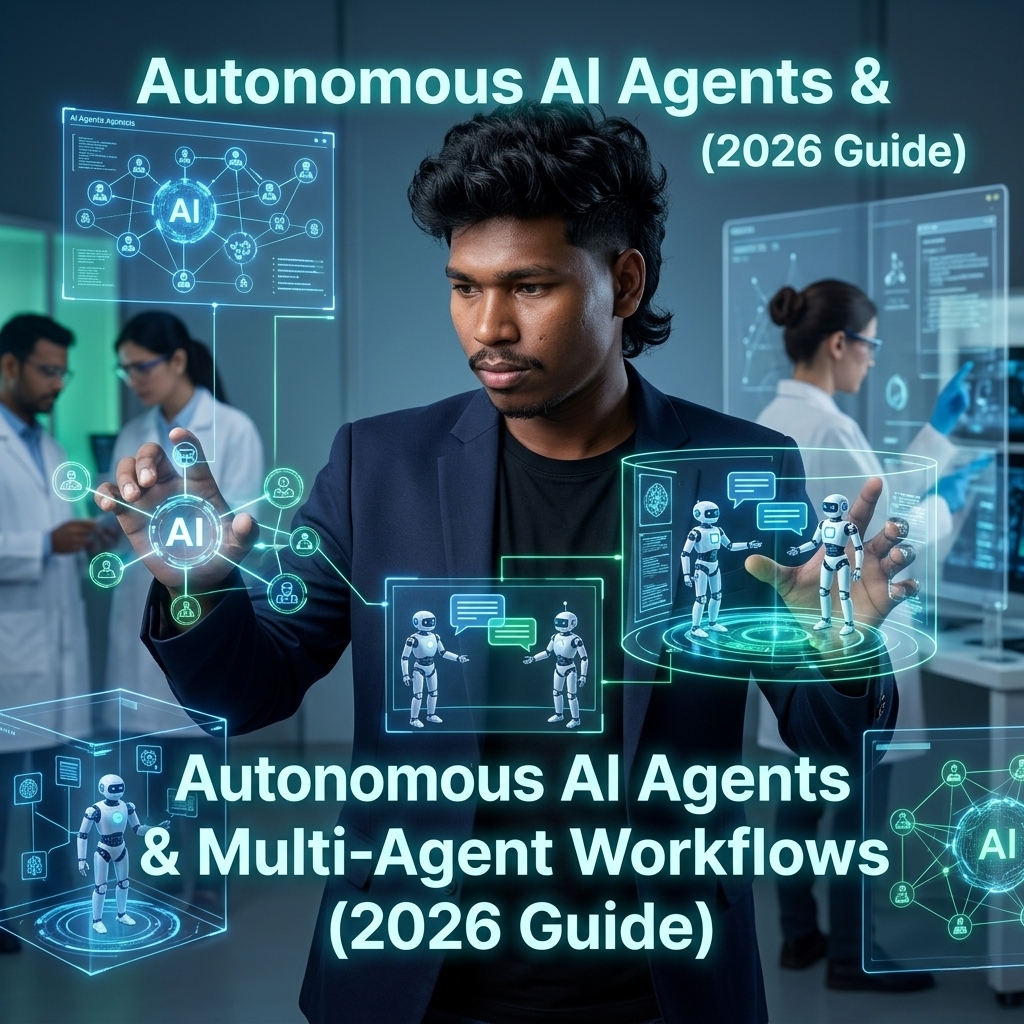
Discover how autonomous AI agents and multi-agent workflows in 2026 are transforming app development, content automation, and digital publishing.
Executive Summary & Key Takeaways
The artificial intelligence landscape has reached a decisive turning point in 2026. While single-prompt generative tools defined early AI adoption, modern software development and digital publishing are now powered by autonomous AI agents and multi-agent orchestrations. These systems do not merely answer questions; they plan multi-step execution paths, invoke external tools, correct intermediate errors, and deliver end-to-end results with minimal human intervention.
At ISMARTANJI CREATIONS, helping creators, developers, and tech enthusiasts harness cutting-edge digital workflows is at the heart of our mission. Whether you build web platforms, optimize mobile applications, or produce specialized tech content, mastering agentic workflows is essential to staying competitive. This 2026 guide breaks down the core architecture of autonomous AI agents, practical multi-agent coordination frameworks, real-world deployment strategies, and best practices for human-in-the-loop oversight.
1. Understanding Agentic AI: The Evolution Beyond Chatbots
1.1 From Passive Prompting to Active Agency
The key difference between traditional large language models (LLMs) and autonomous agents lies in agency. Passive AI tools operate on a single-turn request and response model: a user inputs a prompt, and the AI outputs text or media. If the query requires searching live databases, testing code in a terminal, or making sequential API calls, passive chatbots stop short.
Autonomous AI agents, by contrast, possess an active execution loop. Given a high-level goal, an agent formulates its own step-by-step roadmap, chooses appropriate tools (such as web browsers, code sandboxes, or local database queries), assesses the accuracy of intermediate outputs, and loops until the goal is achieved.
1.2 Generative AI vs. Autonomous Agentic AI
| Capability Dimension | Passive Generative AI | Autonomous Agentic AI (2026) |
|---|---|---|
| Operational Model | Single-turn prompt & response | Multi-step iterative execution loop |
| Tool Integration | Manual user intervention | Autonomous API, browser, and shell invocation |
| Memory Architecture | Context window limit per session | Short-term working context + Long-term vector memory |
| Error Handling | Fails on broken inputs | Self-correcting; re-evaluates and retries failed steps |
| User Role | Micro-managing prompts | Setting goals and reviewing final deliverables |
2. The Four Pillars of Modern AI Agent Architecture
An effective autonomous AI agent relies on four tightly integrated subsystems working in coordination:
- The Reasoning & Planning Module: Breaks down complex, ambiguous user objectives into granular, sequential subtasks using techniques like Tree-of-Thoughts (ToT) and self-reflection loops.
- The Memory System: Manages real-time working context (short-term memory) alongside persistent vector storage (long-term memory) to retrieve relevant user preferences, historical project notes, and documentation across sessions.
- The Tool Execution Engine: Interacts directly with external environments, executing Python scripts, making REST API calls, browsing live web pages, and querying local file systems.
- The Evaluation & Guardrail Loop: Monitors output quality, verifies factual accuracy, and enforces safety, security, and AdSense policy constraints before finalizing deliverables.
3. Multi-Agent Workflows: Why Teams of Specialists Outperform Single Models
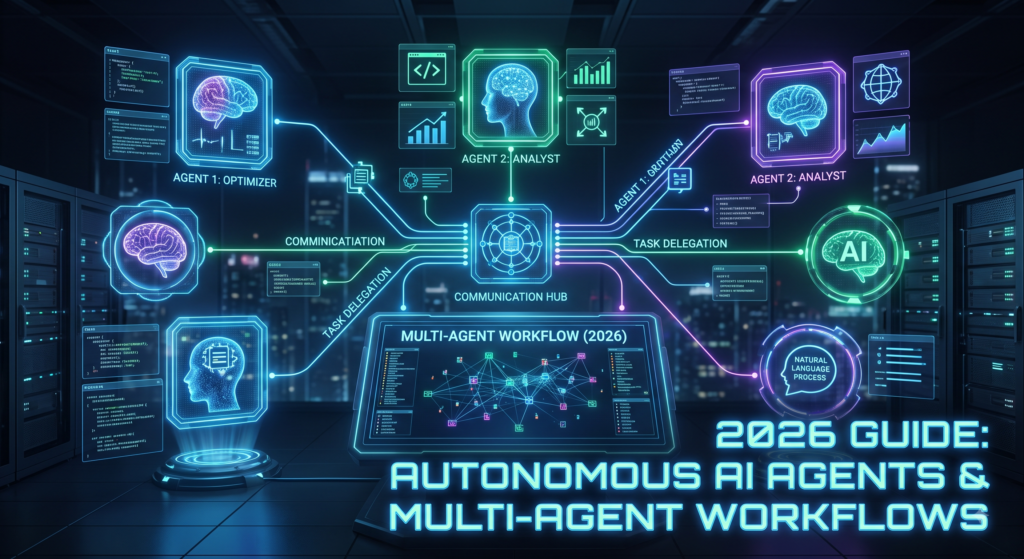
While individual AI agents handle discrete tasks efficiently, complex digital projects require multi-agent workflows. Instead of overloading a single AI with research, writing, code debugging, and SEO formatting, developers orchestrate specialized agent networks.
3.1 Role-Based Delegation
In a typical multi-agent setup, each agent operates with a defined role, persona, and set of allowed tools:
- Research Agent: Scours live web APIs, documentation, and internal databases to gather verified facts and citations.
- Coder/Engineer Agent: Writes, tests, and refines software snippets within an isolated execution sandbox.
- Writer & Content Agent: Synthesizes raw findings into clear, engaging, humanized articles adhering to style guides.
- Editor & Compliance Agent: Audits content for grammar, tone, AdSense compliance, and factual accuracy before publishing.
By passing structured data between these specialized roles, multi-agent frameworks reduce hallucination rates by over 60% compared to monolithic prompt chains.
3.2 Real-World Applications for Tech Creators
Multi-agent coordination is transforming how independent tech platforms operate in 2026:
- Automated Web Publishing: Generating SEO-optimized technical guides, complete with meta descriptions, structured schema markup, and verified code examples.
- Mobile Development & Testing: Running automated UI regression tests, parsing log files, and generating bug patch recommendations directly in development environments.
- Visual & Media Pipelines: Automating asset tagging, image background adjustments, and video caption generation alongside on-device editing tools.
4. Integrating On-Device Processing with Agentic Workflows
A major trend in 2026 is the convergence of agentic AI with on-device computing. As smartphones and personal laptops now feature high-performance Neural Processing Units (NPUs), light-weight quantized models (4-bit and 8-bit) run directly on local silicon.
When paired with cloud-based master agents, hybrid local-cloud architectures allow sensitive tasks—like local file organization or initial text summaries—to process locally with zero latency and complete data privacy. Heavy multi-agent orchestration and web synthesis occur in cloud environments seamlessly.
5. Maintaining Human-in-the-Loop Oversight & AdSense Compliance
Automation in 2026 is designed to empower human creativity, not replace it. To build a sustainable tech brand or monetized publication, maintaining a strict Human-in-the-Loop (HITL) framework is essential.
5.1 Practical Rules for Content Quality
- Never Automate Opinions or Core Judgments: AI can aggregate data, but unique perspectives, personal experiences, and editorial voices belong strictly to human creators.
- Fact-Check Every Technical Claim: Always verify dates, API endpoints, and technical specifications before publishing.
- Prioritize Reader Value Over Volume: Search engines and monetization platforms like Google AdSense reward original, comprehensive, user-focused content while penalizing thin or generic AI churn.
- Maintain Clear Style Guidelines: Use custom prompts and editorial checklists to preserve a natural, human reading rhythm free of repetitive AI phrasing.
Conclusion & Actionable Next Steps
Autonomous AI agents and multi-agent workflows mark a permanent shift in how digital content, software, and tech services are built. By shifting mechanical, repetitive chores to specialized agent networks, creators reclaim valuable hours to focus on strategy, community building, and original innovation.
Your 5-Step Action Plan:
- Audit Your Weekly Workflow: List repetitive, structured tasks that take up significant time (e.g., generating meta tags, formatting code snippets, or transcribing video audio).
- Choose the Right Framework: Explore open-source multi-agent frameworks or workspace automation tools to build your first pipeline.
- Define Granular Roles: Create specialized agent prompts with strict role boundaries rather than relying on one generic assistant prompt.
- Implement Local-First Privacy Controls: Keep sensitive user files and personal documentation isolated on local hardware using on-device models.
- Enforce Human Approval: Always maintain a final human review step for all public-facing articles, software releases, and client communications.
Stay tuned to ISMARTANJI CREATIONS for the latest operational guides, AI tools analysis, and tech productivity strategies in 2026.
PRESET COUNTDOWNDOWNLOAD LINK
AS13