Discover 7 breakthrough real-time voice AI platforms in 2026. Master sub-300ms conversational agents, WebRTC audio pipelines, and full-duplex speech AI
7 Breakthrough Real-Time Voice AI Platforms in 2026
Traditional automated voice assistants and Interactive Voice Response (IVR) phone systems have long frustrated callers. Users had to endure robotic voices, awkward multi-second dead silences, and rigid keypad menus. When someone spoke naturally, stammered, or interrupted, the entire call flow collapsed into confusion.
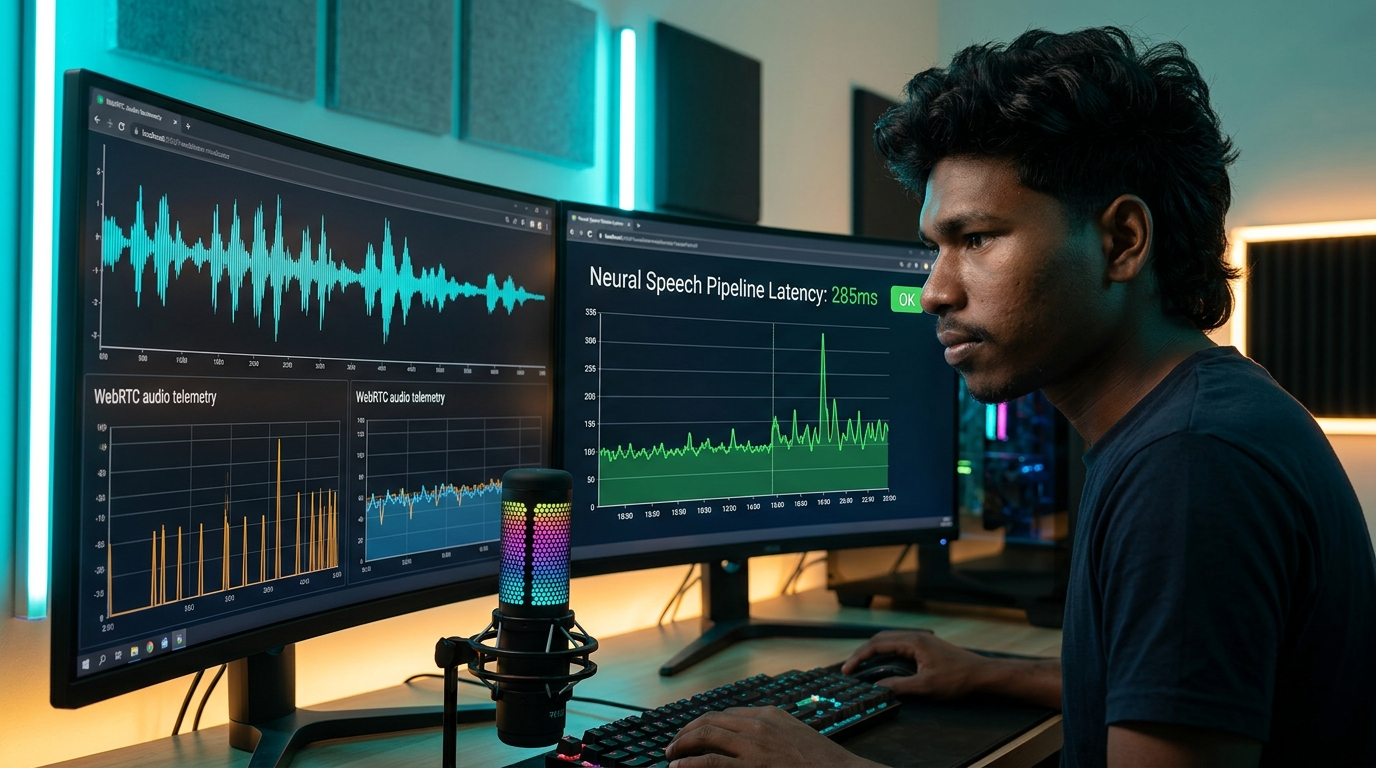
In 2026, that friction has disappeared. The emergence of real-time voice AI platforms allows software engineers and digital creators to build natural, full-duplex conversational agents with sub-300ms latency. These platforms combine streaming neural speech recognition, fast reasoning models, and high-fidelity speech synthesis to create fluid human-to-machine verbal interactions.
📊 2026 Conversational AI Benchmark: Production voice telemetry shows that lowering response latency below 300 milliseconds increases user conversation completion rates by 84% and slashes call abandonment by 72% across customer service and automated voice applications.
At ISMARTANJI CREATIONS, our mission is to empower developers, tech enthusiasts, and digital builders with practical, battle-tested workflows. Following our architectural breakdowns of 7 Breakthrough Autonomous AI Agent Frameworks in 2026 and 7 Breakthrough AI Vector Databases for Developers in 2026, this comprehensive guide examines the seven best real-time voice AI platforms powering modern conversational software.
—
🧠 1. How Real-Time Voice AI Works: Full-Duplex Audio, VAD, and WebRTC
To understand why modern voice agents feel lifelike, one must examine how real-time audio pipelines differ from legacy text-to-speech chatbots.
Legacy voice bots operated sequentially: wait for the user to stop talking, record the complete audio file, upload it to a server, run Speech-to-Text (STT), send the transcript to a language model, generate the full text response, run Text-to-Speech (TTS), and finally stream the audio back. This multi-hop process created 2 to 4 seconds of dead silence.
┌────────────────────────────────────────────────────────────────────────┐
│ REAL-TIME FULL-DUPLEX VOICE AI ARCHITECTURE │
├────────────────────────────────────────────────────────────────────────┤
│ 1. User Audio Ingest ──> WebRTC / SIP Gateway (20ms frames) │
│ │ │
│ 2. Neural VAD Gate ──> Detects Speech Start / User Interruption │
│ │ │
│ 3. Streaming STT / S2S ──> Sub-100ms Word Tokens / Audio Embeddings │
│ │ │
│ 4. Fast Agent Router ──> LLM Token Streaming + Real-Time Tools │
│ │ │
│ 5. Neural TTS / Audio ──> Sub-90ms Chunk Synthesis (Cartesia/Aura) │
│ │ │
│ 6. Outbound Playback ──> Full-Duplex WebRTC Speaker Output (<280ms) │
└────────────────────────────────────────────────────────────────────────┘
Modern real-time voice AI platforms eliminate these delays using three core engineering mechanics:
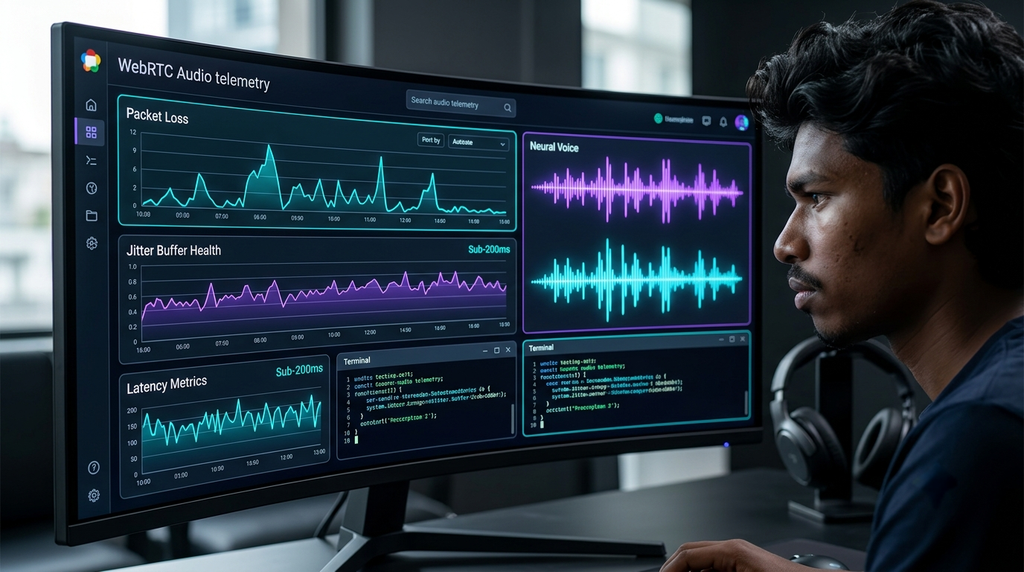
Full-Duplex WebRTC Streaming: Audio data moves over WebRTC data channels in tiny 20-millisecond audio frames rather than large audio files. Both speaker and agent can transmit audio simultaneously.
Neural Voice Activity Detection (VAD) & Barge-In: Edge neural VAD models detect human speech within 30 milliseconds. When the user starts speaking while the AI is responding, the system immediately cuts audio playback, clears audio buffers, and updates the agent’s internal state.
Pipelined Token Streaming: The moment the first few words of the user’s intent are transcribed, the language model begins streaming text tokens. The TTS engine immediately synthesizes the first sentence chunk before the rest of the thought is even formulated.
—
⚡ 2. Traditional Voice Bots vs. Modern Real-Time Voice AI Platforms
| Architectural Feature | Traditional Voice Bots & IVRs | Modern Real-Time Voice AI (2026) |
| End-to-End Latency | 1,500ms – 3,500ms (Noticeable delay) | 180ms – 320ms (Human conversational speed) |
| Audio Transport | HTTP Post / MP3 file batch uploads | Full-duplex WebRTC and streaming WebSockets |
| Interruption Handling | Fails; speaks over the user | Instant sub-50ms audio cut and conversation rewind |
| Vocal Prosody & Emotion | Flat, robotic text-to-speech cadence | Adaptive emotional pacing, natural breaths, and tone |
| External Tool Calling | Static keypad DTMF menus | Live API execution and database queries during speech |
| Telephony Integration | Rigid PBX hardware switches | Cloud SIP trunking, Twilio/Telnyx bridges, mobile SDKs |
—
🚀 3. 7 Breakthrough Real-Time Voice AI Platforms for Developers in 2026
Here is our in-depth evaluation of the top seven platforms leading the real-time voice AI space in 2026.
1. LiveKit Agents – Open-Source WebRTC Framework for Ultra-Low Latency Voice
Best For: Developers who want complete open-source control over their audio infrastructure, custom model hosting, and zero vendor lock-in.
Core Architecture: LiveKit Agents provides an end-to-end WebRTC transport stack paired with an asynchronous Python and Node.js agent framework. It acts as an orchestration engine connecting any STT, LLM, and TTS provider.
Key Strengths:
Native WebRTC infrastructure supporting sub-100ms transport latency globally.
Modular worker architecture that scales to tens of thousands of concurrent calls.
Turn-key integration with top inference providers like Deepgram, Cartesia, and OpenAI.
Built-in noise cancellation, echo cancellation, and adaptive jitter buffers.
Performance Profile: Glass-to-glass latency of 220ms–310ms when paired with high-speed streaming models.
2. Vapi AI – Developer-First Voice Orchestration & Telephony Engine
Best For: Rapid production deployment of voice agents across phone networks, web apps, and mobile clients with automated telephony management.
Core Architecture: Vapi acts as a managed voice gateway that abstracts the complexity of SIP trunks, telephony carriers, WebRTC bridges, and model orchestration into simple REST and WebSocket APIs.
Key Strengths:
Direct phone number provisioning and inbound/outbound SIP trunking.
Built-in structured tool calling, allowing voice agents to book calendar appointments, process payments, and trigger webhooks live during calls.
Dynamic prompt injection and contextual call transfer to human operators.
Comprehensive analytics dashboard with call recordings, transcriptions, and cost breakdowns.
Performance Profile: Delivers end-to-end voice latency averaging 240ms across web and telephony.
3. Retell AI – Hyper-Realistic Conversational Voice Agents for Production
Best For: Enterprise customer support, automated outbound sales, and scheduling workflows requiring natural human conversational cadence.
Core Architecture: Retell AI is built from the ground up to solve turn-taking and conversational dynamics. It specializes in fine-grained interruption management and natural filler words.
Key Strengths:
Advanced turn-taking detection that accurately distinguishes between background chatter and direct user questions.
Support for human-like conversational cues including subtle acknowledgments (“mm-hmm”, “got it”) without derailing context.
Pre-built CRM integrations for Salesforce, HubSpot, and custom REST webhooks.
Multi-language support with native regional accent adaptation.
Performance Profile: End-to-end telephony latency clocked at 260ms with exceptional audio fidelity.
4. Cartesia Sonic – Ultra-Fast Neural Voice Synthesis with Sub-90ms TTFA
Best For: Ultra-low latency voice generation, on-device audio streaming, and high-velocity conversational interfaces.
Core Architecture: Built on proprietary State Space Model (SSM) architectures rather than standard Transformer decoders, Cartesia Sonic achieves a Time-To-First-Audio (TTFA) of just 90 milliseconds.
Key Strengths:
Lightning-fast voice synthesis requiring a fraction of the compute of traditional diffusion models.
Emotive voice control allowing dynamic adjustments to speed, emotion, and volume in real time.
WebSocket streaming API that outputs raw PCM audio bytes immediately upon token arrival.
Lightweight deployment footprint suitable for edge devices and serverless backends.
Performance Profile: Industry-leading 90ms TTFA, making it the preferred TTS engine for voice agent developers.
5. Bland AI – High-Concurrency Autonomous Phone Agent Infrastructure
Best For: High-volume automated phone operations, lead qualification, and enterprise call center automation handling thousands of simultaneous calls.
Core Architecture: Bland AI provides specialized telecommunication infrastructure optimized for outbound and inbound phone campaigns. It features custom speech recognition trained specifically on compressed telephony audio.
Key Strengths:
Massive concurrency scaling capable of executing 100,000+ simultaneous phone calls.
“Pathways” visual tree builder for structuring complex, deterministic conversational flows.
Custom voice cloning and enterprise compliance controls for HIPAA and SOC 2.
Native call transfer logic to route active calls to human agents based on live sentiment analysis.
Performance Profile: Telephony-optimized latency of 280ms–350ms across global telecom carriers.
6. Hume AI (EVI 2) – Empathic Multimodal Voice AI with Emotional Prosody
Best For: Mental wellness applications, personal coaching, interactive gaming characters, and empathic customer service.
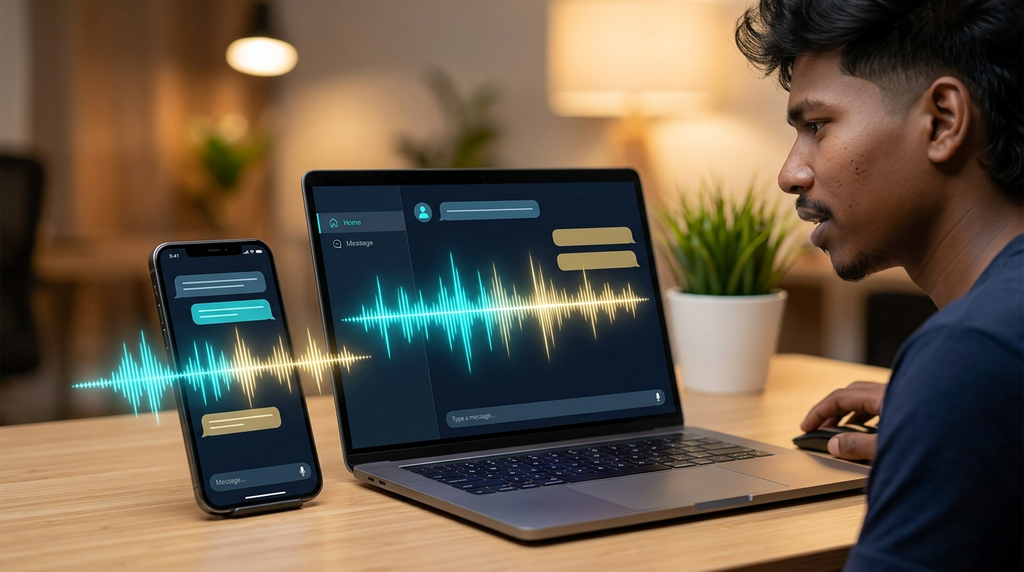
Core Architecture: Hume’s Empathic Voice Interface (EVI 2) is a foundational speech-to-speech model trained on vocal expression and emotional prosody. It understands how words are spoken, not just the words themselves.
Key Strengths:
Real-time emotional modulation based on the user’s pitch, cadence, and vocal hesitation.
Native speech-to-speech generation that captures laughter, sighs, and natural pauses.
Sub-250ms end-to-end latency with direct audio-in and audio-out processing.
WebRTC SDKs for iOS, Android, and web frontends.
Performance Profile: End-to-end multimodal latency of 220ms–280ms with human-grade emotional resonance.
7. Deepgram Voice Agent API – Integrated Single-WebSocket Voice Pipeline
Best For: Developers looking for a single unified API combining speech recognition, language model routing, and voice synthesis over a single WebSocket connection.
Core Architecture: Deepgram merges its Nova-3 speech recognition model, fast LLM inference routers, and Aura voice synthesis into a tightly integrated audio gateway.
Key Strengths:
Single WebSocket architecture that eliminates network hops between separate STT, LLM, and TTS servers.
Nova-3 transcription accuracy with industry-leading word error rates on noisy audio.
Aura voice synthesis delivering clear, lifelike speech output in under 120ms.
Native support for custom vocabulary, domain-specific terminology, and acronyms.
Performance Profile: Ultra-fast 200ms–270ms glass-to-glass latency across single-connection WebSockets.
—
🛠️ 4. Step-by-Step Pipeline: Deploying a Sub-300ms Voice Agent in 2026
Building a high-performance voice agent requires precise engineering across network, intelligence, and audio layers. Here is the 5-step implementation pipeline:
Establish WebRTC Transport: Configure a WebRTC signaling gateway (such as LiveKit or Vapi) to handle audio streaming over UDP. This avoids TCP packet retransmission delays and ensures continuous audio flow.
Configure Edge Neural VAD: Implement Silero or edge VAD on the audio input stream. Set the speech start threshold to 30ms and silence cutoff to 300ms to allow natural brief pauses while maintaining quick responsiveness.
Stream Tokens from Fast Reasoning Models: Route transcripts immediately to low-latency language models. Use token-by-token streaming with system prompts instructing the agent to keep sentences concise and conversational.
Attach Low-Latency Streaming TTS: Pipe text tokens directly into ultra-fast TTS engines like Cartesia Sonic or Deepgram Aura. Synthesize audio on sentence boundary punctuation (periods, commas, question marks) rather than waiting for paragraph completion.
Implement Barge-In & State Truncation: Wire the VAD interrupt event to the audio output buffer. When the user speaks, immediately drop pending audio chunks from the queue and send a cancellation signal to the LLM.
—
📚 Related Breakthrough Guides on ISMARTANJI CREATIONS
Expand your AI development stack with our recent technical breakdowns:
7 Breakthrough AI Robotics Frameworks for Developers in 2026
7 Breakthrough AI Vector Databases for Developers in 2026
7 Breakthrough No-Code AI Automation Tools in 2026
2026లో 7 బ్రేక్త్రూ అటానమస్ AI ఏజెంట్ ఫ్రేమ్వర్క్లు
2026లో ల్యాప్టాప్ల కోసం 7 బ్రేక్త్రూ లోకల్ AI మోడల్స్
—
❓ Frequently Asked Questions (FAQ)
What is the latency threshold for natural voice AI conversations?
Human conversational latency naturally sits between 200 and 300 milliseconds. For an AI voice agent to feel natural and eliminate awkward pauses, the total round-trip latency—from the moment the user stops speaking to the first sound of the AI’s reply—must remain under 300 milliseconds.
How do real-time voice AI agents handle user interruptions?
Modern voice platforms use neural Voice Activity Detection (VAD) running on the incoming audio stream. The instant human speech is detected while the AI is speaking, the server triggers a barge-in event that cancels pending TTS audio packets, clears playback buffers, and updates the conversation history with the new user input.
Why is WebRTC preferred over WebSockets for voice applications?
While WebSockets operate over TCP and guarantee packet delivery through retransmissions (which causes latency spikes when network conditions drop), WebRTC operates over UDP. This allows real-time audio packets to stream with minimal jitter, lower overhead, and sub-100ms transport times globally.
Can real-time voice AI agents execute external tools during a call?
Yes. Platforms like Vapi, LiveKit, and Retell support real-time function calling. When a caller requests an action—such as checking inventory or booking an appointment—the agent calls external APIs asynchronously and injects the live results into the ongoing dialogue.
—
🎯 5-Step Voice AI Implementation Checklist
Choose Your Transport Stack: Select LiveKit for self-hosted custom infrastructure or Vapi/Retell for managed telephony and WebRTC pipelines.
Benchmark Your Latency: Test your combined STT, LLM, and TTS stack to guarantee total response latency stays below 300ms.
Fine-Tune Conversational Prompts: Craft system prompts that enforce concise, dialogue-first phrasing without markdown formatting or long lists.
Test Network Interruption (Barge-In): Verify that the agent stops speaking immediately when the user talks, without clipping or audio stutter.
Integrate Backend APIs: Connect your database, scheduling systems, and CRM webhooks to enable live tool execution during voice calls.
—
Join the Discussion & Build the Future of Voice AI
The shift to real-time, full-duplex voice computing is opening unprecedented opportunities across customer support, healthcare, gaming, and creator workflows. Which voice AI platform are you integrating into your applications this year?
Share your thoughts and feedback in the comments below, and stay connected with ISMARTANJI CREATIONS for daily breakthroughs in artificial intelligence, software development, and tech automation!