
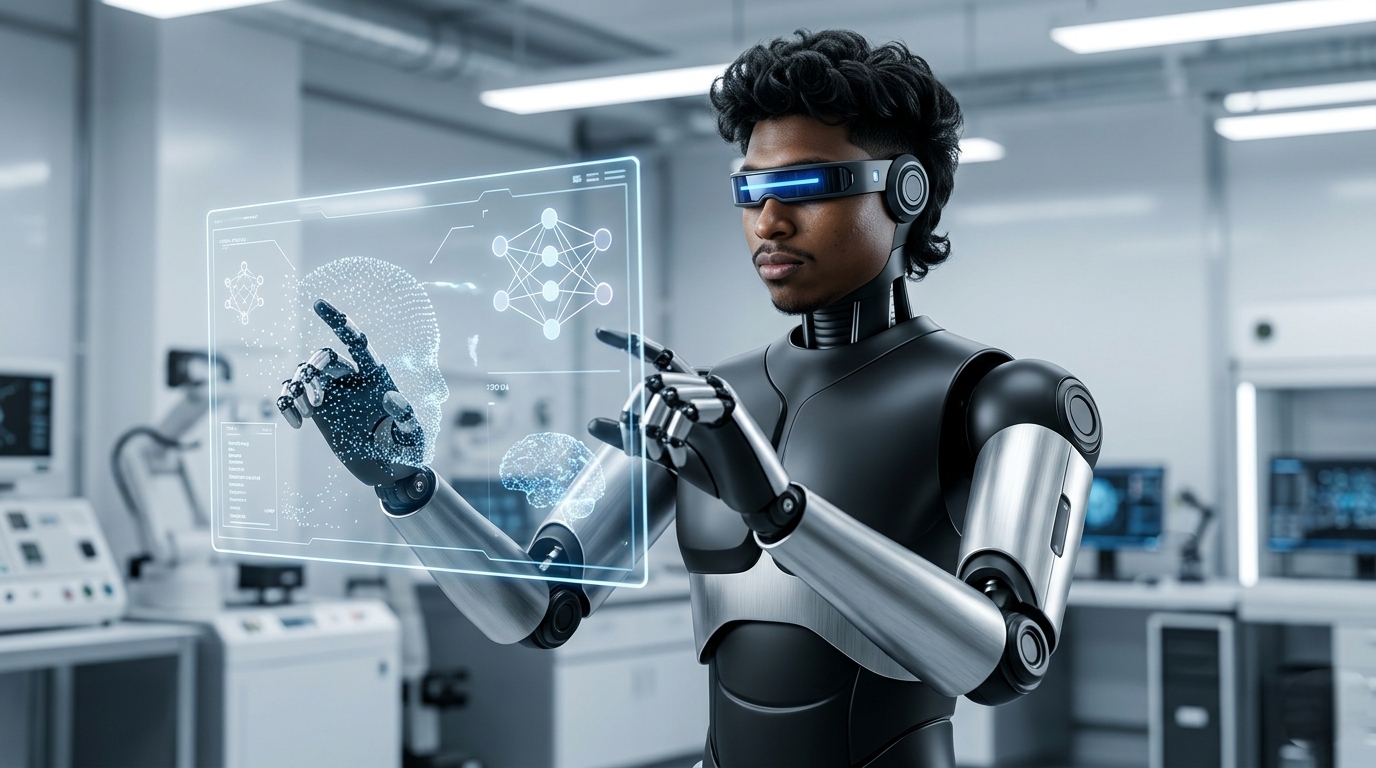
Explore how Physical AI, Vision-Language-Action (VLA) models, and humanoid robotics in 2026 are transforming automation, tech creation, and smart hardware.
Architectural Overview & The Shift to Physical AI
For several years, artificial intelligence lived almost entirely inside digital borders. We interacted with models through chat interfaces, generated code in text editors, and rendered synthetic graphics across computer monitors. While these digital tools redefined knowledge workflows, they remained fundamentally detached from the tangible world.
In 2026, that boundary has dissolved. We are witnessing the rapid emergence of Physical AI—systems engineered not merely to generate text or pixels, but to perceive, understand, and physically manipulate the three-dimensional physical world.
The convergence of high-density electric actuators, on-device neural processing units (NPUs), and groundbreaking Vision-Language-Action (VLA) foundation models has propelled humanoid robotics out of isolated research laboratories and onto production lines, warehouse floors, and developer workbenches.
At ISMARTANJI CREATIONS, where we explore the intersection of artificial intelligence, cutting-edge technology, and practical automation, understanding this transition from software algorithms to embodied hardware agents is essential for developers, creators, and innovators. This comprehensive guide breaks down the core architecture of VLA models, examines the leading humanoid hardware platforms of 2026, and provides actionable insights into how creators and tech labs can leverage the physical AI revolution.
1. Deconstructing Vision-Language-Action (VLA) Models
To understand why humanoid robotics experienced an exponential leap forward in 2026, one must examine the software architecture running inside the machine. Traditional robotics relied heavily on rigid, hand-crafted kinematic controllers and narrow computer vision scripts. Engineers had to write explicit mathematical formulas for every millimeter of joint rotation and hardcode conditional logic for every possible obstacle.
Vision-Language-Action (VLA) models replace that fragile paradigm with unified, end-to-end neural networks.
1.1 How VLAs Operate
A modern VLA model unifies three distinct sensory and cognitive capabilities into a single foundation architecture:
- Visual Perception (Vision Encoders): Real-time spatial processing of RGB-D camera feeds, depth point clouds, and tactile sensory signals.
- Language Understanding (LLM Core): High-level semantic reasoning, task decomposition, and natural language instruction parsing (e.g., “Pick up the loose screwdriver, inspect the tip for wear, and place it into the third tray”).
- Action Generation (Continuous Joint Tokens): Instead of generating words or text tokens, the model outputs discrete and continuous motor trajectory vectors (joint angles, velocities, and gripper forces).
Open-weight robotics architectures such as OpenVLA and flow-matching diffusion policies (like π₀) enable remarkable zero-shot generalization. A robot trained on thousands of manipulation tasks can encounter an unfamiliar tool in novel lighting conditions and successfully interact with it without requiring custom task retraining.
| Architecture Type | Input Modalities | Processing Engine | Output Type | Generalization Level |
|---|---|---|---|---|
| Traditional Robotics | Hand-tuned sensor scripts | Fixed Inverse Kinematics & PID loops | Explicit joint angles | Extremely narrow / Fragile |
| Vision-Language (VLM) | Image + Text prompt | Multimodal Transformer | Text descriptions / boxes | Digital only (No motor control) |
| Vision-Language-Action (VLA) | Live Video + Tactile + Voice | Unified Spatial-Action Transformer | Continuous torque & trajectories | High zero-shot physical generalization |
2. Spatial Intelligence & Sim2Real: How Robots Learn Physics
Developing Physical AI in 2026 relies on two primary data pipelines: Sim2Real Transfer and Large-Scale Teleoperation.
2.1 Hyper-Realistic Physics Simulation
Training physical robots exclusively in the real world is slow and risks hardware wear. To overcome this physical data bottleneck, robotics engineers train generalist policies inside photorealistic, physics-accurate simulation platforms like NVIDIA Isaac Lab & Cosmos.
Within these virtual environments, thousands of simulated robots practice grasping, balancing, and tool handling simultaneously at 100x real-time speed. By introducing domain randomization—varying friction values, lighting angles, mass distributions, and visual noise—the neural policies build strong physical resilience before ever deploying to physical silicon.
2.2 Human Demonstration & Action Chunking
For complex, dexterous manipulation tasks that require nuanced touch (such as threading cables, folding soft fabrics, or packing delicate components), human demonstration remains essential. Operators wearing low-latency VR headsets and haptic gloves demonstrate tasks in real time.
Modern algorithms leverage Action Chunking with Transformers (ACT) and diffusion policies to compress continuous human demonstration data into fluid, repeatable robotic motor skills.
3. Top Humanoid Hardware Platforms of 2026
The hardware landscape in 2026 has bifurcated into heavy-duty industrial systems engineered for manufacturing and agile, open-access platforms designed for research institutions, automation developers, and tech creators.
3.1 Industrial Powerhouses
Figure AI (Figure 02 & Figure 03)
Figure has established strong commercial footing through active integrations in automotive manufacturing. Featuring 44 degrees of freedom, integrated speech-to-speech conversational reasoning, and custom tactile sensor arrays in each fingertip, Figure’s robots handle sequencing and component placement with human-level cycle times.
Tesla Optimus (Gen 2 & Gen 3)
Tesla leverages its vertical integration, custom in-house actuator design, and proprietary vision-only neural network stack trained on automotive fleet data. Optimus excels in repetitive, high-precision industrial logistics within Tesla’s own factories, demonstrating reliable autonomous navigation and self-calibrating balance.
Boston Dynamics (Electric Atlas)
Moving completely away from legacy hydraulics, the all-electric Atlas represents a high standard in power density, rotational range of motion, and dynamic athletic balance. Boston Dynamics pairs this platform with advanced teleoperation and autonomous fleet software for heavy automotive assembly.
3.2 Accessible Platforms for Labs & Creators
Unitree Robotics (Unitree G1 & H1)
The democratization of humanoid hardware in 2026 is led by the Unitree G1 Humanoid. Priced accessibly (starting under $16,000 for base configurations), the G1 delivers 23 to 43 degrees of freedom, 3D LiDAR vision, and full support for onboard secondary compute modules. It has quickly become the go-to platform for university labs, independent AI developers, and tech automation studios.
1X Technologies (1X NEO)
1X approaches humanoid design from a bio-inspired, safety-first perspective. Built with soft, compliance-driven muscle actuators and a lightweight chassis, NEO is engineered specifically for domestic environments where safe physical interaction with humans and everyday objects is paramount.
4. Edge Computing & Low-Latency Robotic Silicon
For humanoid robots, relying solely on cloud compute introduces an unacceptable risk: latency.
When a bipedal robot begins to slip on an uneven surface, it has less than 10 milliseconds to recalculate balance and adjust torque output to its ankle and hip motors. A round-trip query to a cloud server taking 80 to 200 milliseconds would result in a balance failure.
4.1 Onboard NPUs and Real-Time Control Loops
In 2026, humanoid architectures implement a two-tier compute model:
- High-Frequency Reflex Loop (100 Hz – 1,000 Hz): Runs locally on embedded real-time microcontrollers to govern motor current, balance preservation, joint velocity, and obstacle avoidance.
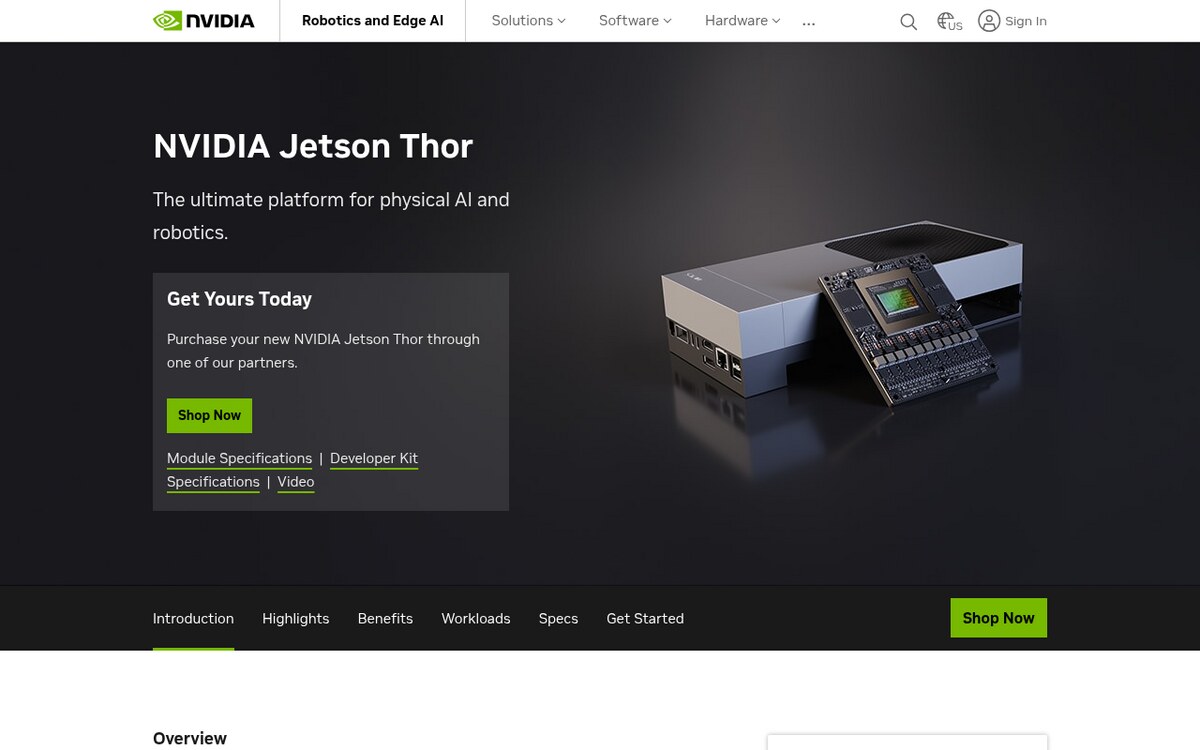
- Low-Frequency Planning Loop (5 Hz – 20 Hz): Runs on high-performance onboard system-on-chips (such as NVIDIA Jetson Thor or dedicated robotics NPUs) to process high-resolution visual feeds, execute VLA foundation models, and plan multi-step actions.
This edge-first architecture guarantees that even if a facility experiences complete network interruption, the robot continues operating safely and autonomously.
5. Practical Opportunities for Developers, Creators & Tech Enthusiasts
The acceleration of physical AI creates unprecedented opportunities for software developers, content creators, and small technology studios.
5.1 Open-Source Frameworks & Simulation SDKs
Developers can immediately begin building and testing robotic behaviors without owning physical hardware:
- ROS 2 (Robot Operating System 2): The industry backbone for modular message passing, hardware abstraction, and sensor orchestration.
- NVIDIA Isaac Sim & Isaac Lab: Comprehensive simulation environments supporting GPU-accelerated reinforcement learning and synthetic data generation.
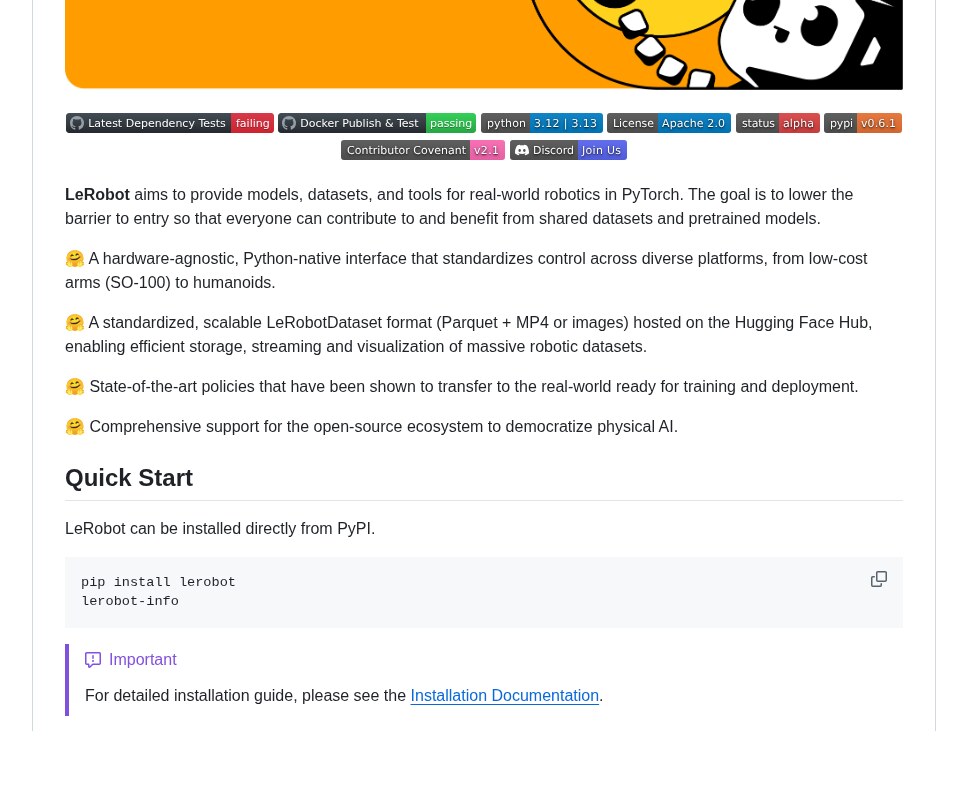
- Open-Source VLA Checkpoints: Pre-trained robotics model weights available on Hugging Face that can be fine-tuned on custom visual demonstration datasets using consumer-grade workstations.
5.2 Content Creation & Practical Automation Workflows
At ISMARTANJI CREATIONS, we emphasize building practical, sustainable automation pipelines. Tech creators and small agencies can leverage emerging robotics tools in several immediate ways:
- Automated Studio Videography: Programming lightweight robotic arms and compact humanoids for repeatable, cinema-grade camera movements and dynamic product tracking.
- Hardware & Edge Benchmarking: Developing objective performance benchmarks comparing edge inference frameworks, motor efficiency, and battery optimization across emerging mobile hardware.
- Cross-Disciplinary Tutorials: Bridging the gap between software developers and hardware builders through accessible, step-by-step guides on ROS 2, Python simulation bindings, and edge NPU deployment.
6. Key Takeaways & Frequently Asked Questions
Summary Checklist:
- Physical AI is Here: Artificial intelligence has advanced from processing digital text and pixels to controlling physical actuators in real-world environments.
- VLAs Are the New Standard: Vision-Language-Action models bridge multimodal perception and continuous motor control into unified foundation architectures.
- Edge Computing is Non-Negotiable: Sub-10ms reflex loops require dedicated onboard silicon to guarantee safety, responsiveness, and zero-latency execution.
- Hardware is Democratizing: Affordable research platforms like the Unitree G1 allow independent builders and small labs to participate directly in the robotics revolution.
Frequently Asked Questions (FAQ)
Q1: What is the main difference between an LLM and a VLA model?
An LLM (Large Language Model) is trained to predict text tokens given a textual prompt. A VLA (Vision-Language-Action) model is trained on multimodal vision feeds and text prompts to output continuous kinematic actions and joint angles that directly control robot hardware.
Q2: How much does an entry-level research humanoid robot cost in 2026?
While industrial-tier humanoids (like Figure or Boston Dynamics) remain high-investment enterprise solutions, entry-level research humanoids like the Unitree G1 start under $16,000, making embodied AI research accessible to universities and small development teams.
Q3: Can developers learn robotics without owning physical robot hardware?
Yes. Modern physics simulation platforms such as NVIDIA Isaac Sim and Gazebo provide photorealistic digital twin environments. Developers can train, evaluate, and benchmark complete reinforcement learning and VLA policies entirely in simulation before deploying to real hardware.
Written & Verified by Sampath Anji
Sampath Anji is a technology researcher, systems developer, and digital creator based in Telangana, India. He specializes in on-device AI architectures, autonomous agent workflows, high-throughput inference engines, and digital media production. Every tutorial on ISMARTANJI CREATIONS is grounded in code reproducibility, verified documentation, and transparent test environments. Read our full testing methodology on our About Us page, or submit feedback and code updates via our Contact Desk.