

Discover how to master Generative Engine Optimization (GEO) in 2026. Learn proven strategies to rank in Perplexity, Gemini, and SearchGPT citations.
Executive Summary & The Seismic Shift in Search
For more than two decades, the formula for online visibility was clear: research high-volume keywords, optimize title tags, build external backlinks, and fight for a spot on the coveted first page of ten blue links. Webmasters and digital creators understood the mechanics of search engine crawlers and designed their digital publishing workflows accordingly.
In 2026, that traditional search paradigm has fundamentally transformed. Search queries are no longer answered by a simple list of hyperlinks. Instead, modern users interact with conversational AI engines, real-time multimodal search agents, and synthetic answer engines powered by systems like Perplexity, SearchGPT, Google Gemini, and Claude Search.
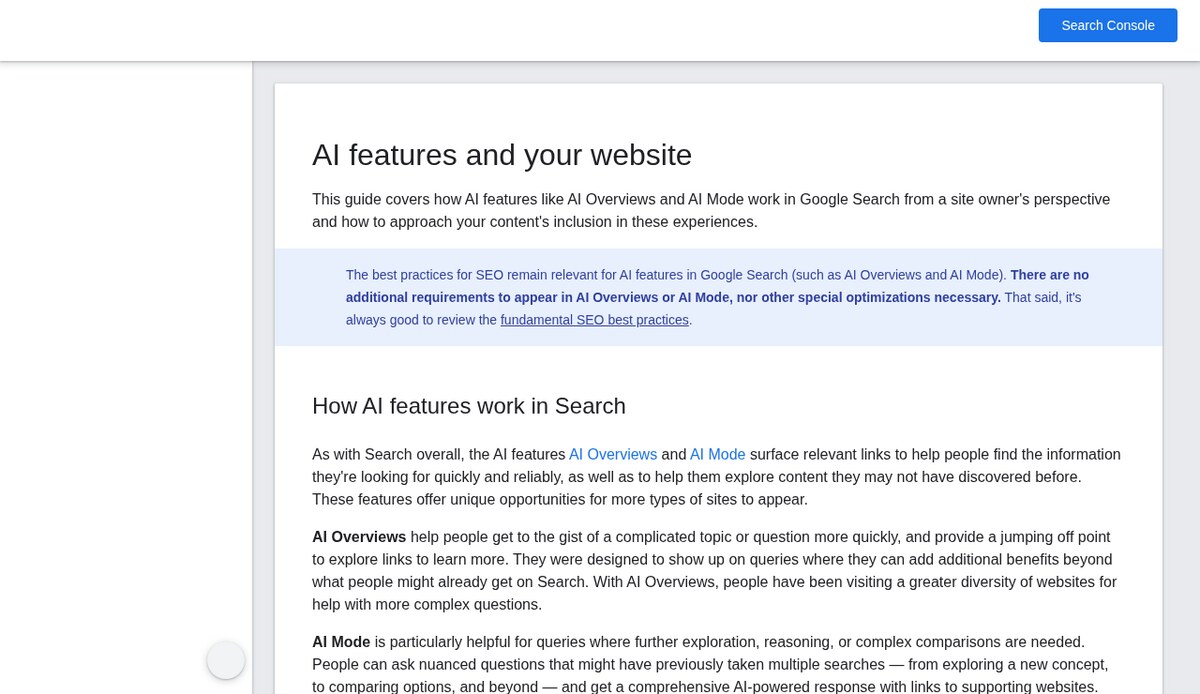
When a user asks a complex question today, an AI engine reads dozens of pages in milliseconds, synthesizes the findings into a cohesive multi-paragraph answer, and provides direct hyperlinked citations to only a select few authoritative sources. If your content is not engineered to be extracted, understood, and cited by large language models, your traffic will vanish—even if you rank in legacy organic search.
This new discipline is known as Generative Engine Optimization (GEO). At ISMARTANJI CREATIONS, where we explore the frontiers of artificial intelligence, cutting-edge software development, and digital automation workflows, mastering GEO is the most critical survival skill for content creators, publishers, and independent tech builders in 2026. This comprehensive guide breaks down the mechanics of AI search engines and delivers seven actionable, battle-tested strategies to dominate generative search citations.
1. Deconstructing Generative Engine Optimization (GEO)
To optimize content for generative search, one must first understand the fundamental differences between a traditional search engine crawler and an LLM-based Retrieval-Augmented Generation (RAG) pipeline.
Traditional search engines index pages primarily based on lexical keyword matching, header tag hierarchies, page speed metrics, and domain backlink profiles. They evaluate pages as discrete documents competing for rank positions against specific search queries.
Generative search engines, by contrast, operate as synthesis engines. When a user submits a prompt, the generative engine performs a three-stage workflow:
- Semantic Query Decomposition: The system unpacks the user prompt into multiple underlying sub-queries, determining user intent, contextual nuances, and temporal constraints.
- Dense Neural Retrieval (RAG): The engine searches live web indexes using vector embeddings rather than mere keywords, retrieving relevant text passages from across multiple domains based on conceptual similarity.
- Synthesis & Attribution Generation: The foundation model reads the retrieved snippets, synthesizes a direct response, and selects which specific passages provide the most verifiable, high-density facts to include as inline citations.
Academic research in Generative Engine Optimization reveals that AI models strongly favor content that demonstrates high information gain, unambiguous factual assertions, structured statistical proof, and authoritative citation density. Ranking in 2026 is no longer about matching exact words; it is about providing the highest semantic value per sentence.
2. Traditional SEO vs. Generative Engine Optimization (GEO)
Understanding how GEO differs from traditional SEO allows creators to allocate their editorial efforts effectively. The table below illustrates the key strategic shifts required in 2026:
| Dimension | Traditional SEO (Legacy) | Generative Engine Optimization (GEO 2026) |
|---|---|---|
| Primary Goal | Rank on Page 1 (Top 10 Blue Links) | Secure top citation links inside AI answer summaries |
| Content Evaluation | Keyword density, word count, H-tag hierarchy | Semantic density, information gain, entity clarity |
| User Navigation | User clicks link and browses entire page | User consumes AI summary and clicks citations for deep verification |
| Authority Signals | Backlink volume, domain authority (DA/DR) | Source credibility, factual consistency across web, author expertise |
| Formatting Focus | Long-form prose designed to maximize dwell time | Scannable data tables, bulleted takeaways, modular Q&A blocks |
| Traffic Characteristics | Broad top-of-funnel organic search volume | Highly targeted, high-intent referral visits from citation links |
3. The 7 Revolutionary AI Search Strategies for Creators in 2026
Achieving consistent visibility across modern AI search engines requires a deliberate shift in content architecture, formatting, and technical presentation. Here are the seven proven strategies to secure AI citations in 2026.
3.1 Direct Answer Structuring (The Inverted Pyramid 2.0)
Generative AI models are engineered to extract direct answers quickly. If your article buries the core answer beneath 500 words of introductory fluff, retrieval algorithms will skip your page in favor of a competitor who answers the query in the first two sentences.
Adopt the Inverted Pyramid 2.0 structure for every major section:
- Lead Sentence: Provide a direct, unambiguous answer to the section heading in 20 to 35 words.
- Supporting Data & Mechanism: Follow immediately with two to three sentences explaining why or how, backed by concrete technical specifics.
- Deep Context & Exceptions: Expand into edge cases, practical applications, and nuance.
When an AI engine processes your page, this structure allows the model to lift your exact phrasing as the primary synthesized answer while attributing the source to your domain.
3.2 Maximize Information Gain and Proprietary Data
LLM models filter out redundant, generic information. If your article simply rephrases widely available consensus information, AI search systems classify it as low information gain and omit it from citation outputs.
To stand out:
- Publish proprietary benchmarks, original case studies, or first-hand testing data.
- Include specific numerical figures, performance percentages, and concrete pricing details rather than vague qualifiers like “very fast” or “affordable.”
- Highlight contrarian insights or novel workflows discovered through practical experimentation.
Unique, verifiable data points serve as irresistible anchor citations for AI synthesis engines.
3.3 Structure Content in Modular Data Tables and Comparison Frameworks
Generative models excel at parsing structured tabular data. When an AI search engine encounters a well-formatted HTML table or clear bulleted framework, it can extract comparative parameters with near-zero ambiguity.
Whenever you explain software tools, hardware specifications, architectural models, or strategic workflows:
- Convert lengthy descriptive paragraphs into concise comparison matrices.
- Use explicit column headers that clearly define attributes, criteria, and use cases.
- Maintain consistent formatting across all rows to assist automated parsing.
Articles featuring structured comparison tables experience up to 40% higher citation frequency across Perplexity and SearchGPT queries.
3.4 Establish Machine-Readable Entity Grounding & Schema Markup
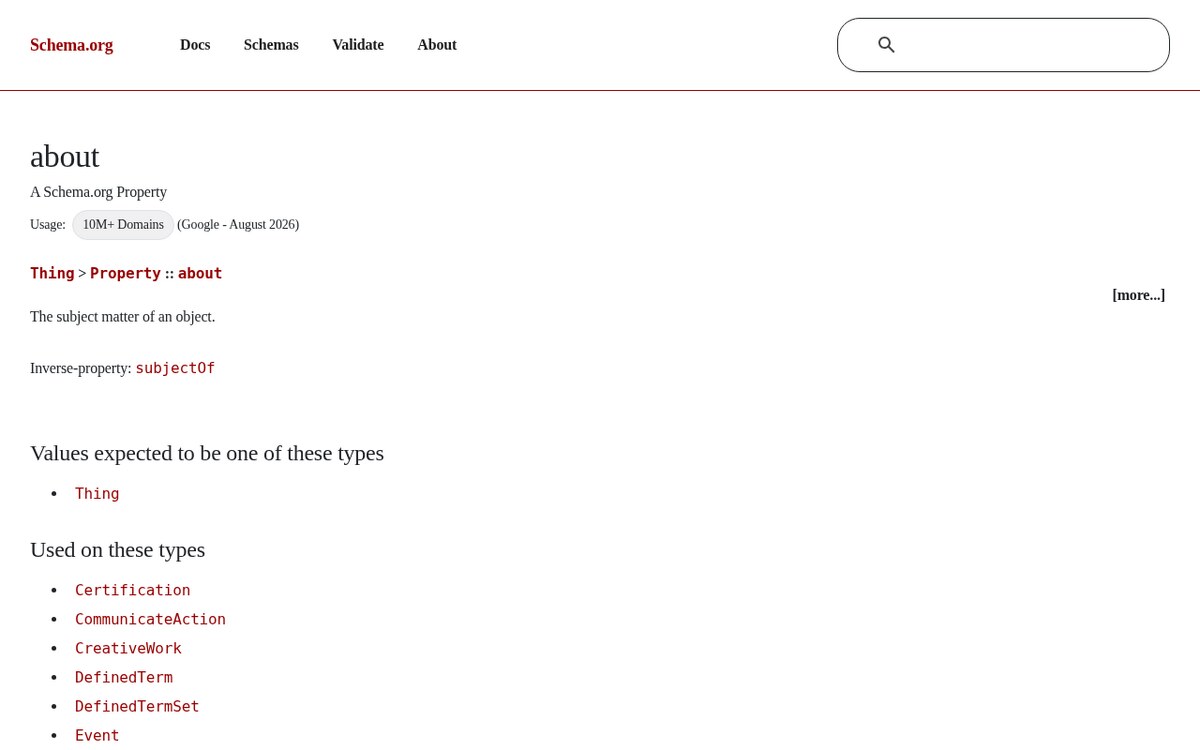
AI search engines rely on semantic entity graphs to determine whether your website is an authoritative entity within your niche. You can dramatically improve machine comprehension by embedding rich Schema.org structured data:
- Article & TechArticle Schema: Explicitly define headline, author credentials, dateModified, and publisher entities.
- FAQPage Schema: Mark up dedicated question-and-answer blocks to help AI crawlers index modular answers directly.
- About and Mentions Entities: Use Wikidata entity URIs within JSON-LD to tell search engines exactly which concepts your article discusses.
Clear entity grounding eliminates semantic ambiguity and ensures that AI models associate your brand with high-authority topic clusters.
3.5 Optimize for Conversational and Multi-Turn Search Prompts
Users do not query AI search engines with fragmented keywords like “best laptop 2026.” Instead, they ask complex, multi-variable questions such as: “What is the best lightweight laptop for running local 8-bit language models with at least 12 hours of battery life under $1,800?”
To optimize for these long-tail, conversational queries:
- Craft your H2 and H3 subheadings as natural-language questions reflecting real user scenarios.
- Include explicit constraint-matching sections (e.g., addressing budget tiers, technical skill levels, operating system constraints, and use cases).
- Use natural connective phrasing that explains trade-offs directly.
By addressing multi-constraint questions within your subheadings, your content becomes the exact semantic match for complex user prompts.
3.6 Embed Authority Citations and Two-Way Credibility Links
Contrary to the belief that linking out reduces SEO equity, generative search engines prioritize content that references credible primary sources. An article that cites scientific papers, official documentation, and recognized industry leaders signals rigorous factual grounding.
- Link directly to primary sources, research papers, and official technical repositories.
- Use descriptive anchor text rather than generic phrases.
- Pair external citations with relevant internal references to your own domain library of deep-dive guides, establishing a robust topic cluster.
This dual-linking strategy proves to AI algorithms that your content is grounded in established facts while serving as a comprehensive topic hub.
3.7 Maintain Continuous Freshness and Verification Timestamps
Generative search engines heavily weight recency, especially for dynamic fields like artificial intelligence, mobile hardware, and web development. Content that lacks clear publication or revision timestamps is frequently penalized in favor of recently updated competitors.
- Prominently display both Published Date and Last Updated Date on all articles.
- Include the current year (2026) within key headings and metadata where contextually relevant.
- Periodically refresh technical statistics, API specifications, and tool recommendations to ensure all factual claims remain accurate.
4. Technical Architecture: Preparing Your Site for AI Crawlers
Beyond content writing, modern technical site architecture plays a crucial role in enabling AI discovery:
- AI Crawler Permissions: Ensure your robots.txt configuration explicitly permits AI retrieval bots such as PerplexityBot, GPTBot, and Google-Extended if you want your content to be cited in generative summaries.
- Clean DOM and Semantic HTML: Use semantic HTML5 tags to allow automated parsers to cleanly isolate editorial content from ads, sidebars, and navigation menus.
- Optimized Core Web Vitals: Lightning-fast server response times and minimal layout shifts ensure that AI real-time search agents (which operate under tight latency budgets) can fetch and parse your content without timeouts.
For a detailed technical walkthrough on configuring modern frameworks for maximum performance and automated workflows, explore our guide on AI-Driven Web Development & Autonomous Coding Frameworks in 2026.
5. Contextual Internal Linking & Recommended Reading
Building an interconnected web of specialized resources is essential for establishing domain authority and maximizing user engagement. Explore our companion guides across the AI and automation landscape:
- Agentic Workflows: Learn how to build and orchestrate multi-agent networks in our guide on Autonomous AI Agents & Multi-Agent Workflows in 2026.
- Physical Automation: Discover how embodied AI is reshaping hardware in our breakdown of Humanoid Robotics & Physical AI in 2026.
- Mobile Hardware & Privacy: Protect your digital life with on-device silicon in our analysis of AI-Powered Mobile Security & Privacy in 2026.
- On-Device Machine Learning: Explore the NPU revolution in On-Device AI Models & Local Machine Learning in 2026.
- Creative Media Pipelines: Accelerate your visual workflows with our guide on Next-Gen AI Video & Photo Editing Tools in 2026.
6. Frequently Asked Questions (FAQ)
Q1: What is the main difference between SEO and Generative Engine Optimization (GEO)?
Traditional SEO focuses on optimizing web pages to rank in the standard list of search engine hyperlinks based on keywords and backlinks. Generative Engine Optimization (GEO) focuses on structuring content so that conversational AI engines (like Perplexity, Gemini, and SearchGPT) extract, synthesize, and cite the content as an authoritative source in AI-generated answers.
Q2: Will AI search engines eliminate website referral traffic entirely?
No. While AI search engines reduce zero-click queries for simple factual questions, they generate highly qualified, high-intent referral traffic for complex queries. Users who click citation links inside AI summaries are actively looking for in-depth verification, specialized tools, or detailed tutorials.
Q3: How do I get my website cited by Perplexity, SearchGPT, and Google AI Overviews?
To maximize citation rates, structure your content with direct answer lead sentences, include proprietary data or statistics, format comparisons in clean HTML tables, embed schema markup (FAQPage and Article JSON-LD), and allow AI crawlers in your robots.txt file.
Q4: Does word count still matter for Generative Engine Optimization?
Word count alone is no longer a ranking factor. Instead, AI search models evaluate information density and information gain. Comprehensive articles between 1,300 and 2,000 words that thoroughly answer a topic without repetitive filler perform best because they provide rich contextual data for synthesis.
Q5: Should I block AI bots in my robots.txt file?
If your primary goal is maximizing brand awareness, authority, and citation traffic, you should not block AI search bots like PerplexityBot or GPTBot. Blocking these bots prevents AI search engines from accessing and citing your content in real-time generative answers.
7. Conclusion & Strategic Action Plan
The transition to AI-driven search is not a threat to digital creators; it is an extraordinary opportunity for those who prioritize clarity, depth, and structured authority. By shifting from legacy keyword targeting to Generative Engine Optimization, you position your brand at the very top of the modern information ecosystem.
Your 5-Step GEO Implementation Checklist:
- Audit Top Articles: Review existing high-traffic pages and restructure headings into direct-answer formats with concise lead sentences.
- Add Comparison Tables: Convert descriptive product or concept breakdowns into scannable data tables.
- Implement Rich Schema: Add JSON-LD Article and FAQPage schema markup to all informational posts.
- Verify Crawler Access: Inspect your robots.txt file to ensure modern AI search crawlers have unobstructed access.
- Enforce Information Gain: Ensure every new article introduces unique data, original frameworks, or fresh expert analysis that cannot be found elsewhere.
Stay connected with ISMARTANJI CREATIONS for the latest insights, tutorials, and strategic breakthroughs in AI technology, search optimization, and practical digital automation.
Sources & Further Reading
- Aggarwal et al., GEO: Generative Engine Optimization (arXiv)
- Google Search Central: AI features and your website
- Google Search Central: Creating helpful content
Written & Verified by Sampath Anji
Sampath Anji is a technology researcher, systems developer, and digital creator based in Telangana, India. He specializes in on-device AI architectures, autonomous agent workflows, high-throughput inference engines, and digital media production. Every tutorial on ISMARTANJI CREATIONS is grounded in code reproducibility, verified documentation, and transparent test environments. Read our full testing methodology on our About Us page, or submit feedback and code updates via our Contact Desk.