

Discover On-Device Neural Features in Mobile Operating Systems: Performance and Privacy. Master offline real-time translation, on-device generative photo tools, neural battery optimization, and privacy controls.
Architectural Overview & The On-Device Intelligence Era
For years, smartphone “intelligence” lived almost entirely in the cloud. Whenever you asked a voice assistant a question, translated a foreign sentence, or transcribed a lecture, your phone had to send your voice and personal data across remote internet servers, wait for cloud compute clusters to process the request, and beam the answer back to your device. This created frustrating latency, drained battery life over cellular networks, and raised serious privacy concerns regarding personal data exposure.
In 2026, that paradigm has undergone a revolutionary transformation. We have entered the era of On-Device Edge Intelligence—where dedicated Neural Processing Units (NPUs) delivering upwards of 45 to 60 TOPS (Trillions of Operations Per Second) run multi-billion parameter Small Language Models (SLMs) and vision transformers natively inside the phone in your pocket. Modern smartphones do not simply connect to AI; they think, reason, and adapt entirely offline.
At ISMARTANJI CREATIONS, our mission is to empower developers, tech enthusiasts, creators, and daily mobile users with practical, actionable tech guides. Following our comprehensive breakdowns of 7 Powerful AI Video Editing Breakthroughs for Creators in 2026 and 7 important spatial AI technologies and creator workflows, this complete guide unveils the seven essential mobile AI features in 2026 that will transform how you work, communicate, photograph, and protect your digital life.
1. Deconstructing Mobile Silicon: The Anatomy of On-Device AI
To understand why 2026 smartphones are drastically more capable than previous generations, one must examine the silicon architecture powering modern mobile chipsets.
In legacy smartphones, the CPU handled general app tasks, while the GPU handled display rendering and gaming. Forcing these traditional processors to calculate multi-dimensional neural matrix multiplications caused severe thermal throttling and rapid battery depletion.
Modern chipsets—such as Qualcomm’s Snapdragon 8 Elite, Apple’s A19 Pro, and Google’s Tensor G5—integrate dedicated Neural Processing Units (NPUs) engineered specifically for quantized neural tensor operations.
- ⚡ Zero-Latency Execution: On-device processing completes complex tasks in sub-20 milliseconds because data never leaves the device’s local memory bus.
- 🔒 Hardware-Enforced Privacy: Sensitive personal data—such as voice recordings, biometric authentication, health metrics, and financial screenshots—is processed inside isolated hardware security enclaves.
- 🔋 Extreme Energy Efficiency: Dedicated NPU cores execute deep learning inferences using up to 85% less battery power compared to legacy CPU-bound calculations.
2. Cloud-Only AI vs. 2026 On-Device Edge AI (Comparison Matrix)
Understanding the fundamental operational differences between legacy cloud-bound AI and modern on-device edge intelligence helps users configure their phones for optimal battery, speed, and privacy:
| Performance Dimension | ☁️ Cloud-Bound Mobile AI (Legacy) | ⚡ On-Device Edge AI (Representative 2026 Capabilities) | User Impact |
|---|---|---|---|
| Network Dependency | Requires active 5G/Wi-Fi connection | 100% Functional in Airplane / Offline Mode | 🟢 Works Everywhere |
| Inference Latency | 400ms – 1,800ms (High server lag) | Sub-20ms instantaneous local response | 🟢 Zero Perceived Delay |
| Data Privacy & Security | Audio/Images uploaded to remote servers | Data never leaves local hardware enclave | 🟢 100% Private |
| Battery Consumption | High radio modem power drain | Ultra-low power dedicated NPU cores | 🟢 30% Longer Battery |
| Live Call Translation | Delayed audio streams with noticeable echo | Real-time bidirectional natural voice dubbing | 🟢 Fluid Conversations |
| Camera Processing | Post-capture cloud enhancement | Zero-shutter-lag computational raw synthesis | 🟢 Pristine Photos |
| Cost & Subscriptions | Recurring monthly cloud API charges | Baked into device hardware with zero fees | 🟢 Completely Free |

3. Core Neural Processing Capabilities on Mobile Devices
3.1 Offline Real-Time Two-Way Call & In-Person Voice Translation
- Ecosystem Availability: Galaxy AI Live Translate, Google Pixel Interpreter Mode, Apple Intelligence Live Dub
- Privacy Level: 100% On-Device (Zero data uploaded)
In 2026, mobile translation has shifted from slow text-to-speech loops into instantaneous, bidirectional neural voice synthesis. When speaking on a phone call or in person, the local NPU transcribes your speech, translates the meaning semantically, and speaks it to the receiver in their native language in real time with cloned voice timbre.
Pro User Tip: On Samsung devices, enable this under Settings > Galaxy AI > Live Translate. On Pixel, activate Live Translate and download offline language packs before international travel.
3.2 Context-Aware Visual Search & Screen Reasoning (Circle to Search 2.0)
- Ecosystem Availability: Google Circle to Search (Android), Apple Visual Intelligence (iOS)
- Primary Function: Multimodal visual question-answering directly on your active screen
Circle to Search 2.0 and Visual Intelligence turn your entire phone screen into an interactive query canvas. Long-press your home bar or camera button to circle objects, extract text from non-selectable images, solve complex equations step-by-step, or identify background songs instantly.
Pro User Tip: Combine visual search with natural language queries—circle a shirt and type “Where to buy in blue size M” to narrow down shopping results immediately.
3.3 Generative Photo Relighting & Semantic Object Reconstruction
- Ecosystem Availability: Generative Photo Assist (Galaxy AI), Magic Editor 2.0 (Pixel), Apple Clean Up (iOS)
- Primary Tools: Generative Fill, Semantic Inpainting, Virtual Studio Relighting
Mobile computational photography in 2026 has evolved beyond basic filters into deep semantic visual synthesis: automatically expand cropped landscape borders with matching skies, reposition virtual three-point studio lighting after the shot, and transform rough line sketches into photorealistic objects matching the photo’s perspective.
Pro User Tip: All photos edited using generative synthesis automatically embed standardized C2PA cryptographic metadata to ensure transparency while keeping visual quality pristine.
3.4 On-Device Meeting Transcription & Action Item Extraction
- Ecosystem Availability: Samsung Voice Recorder AI, Pixel Recorder 3.0, Apple Voice Memos AI
- Processing Speed: 60-minute audio transcribed and summarized in under 12 seconds
Built-in recorder applications now combine on-device speech-to-text with semantic summarization. The phone distinguishes between up to eight distinct speakers, generates structured executive summaries, and automatically extracts commitments into actionable task checklists.
Pro User Tip: On Samsung phones, open Voice Recorder > Tap Recording > Summary to view categorized notes and export them straight to Samsung Notes or Google Docs.
3.5 Adaptive Neural Battery & Silicon Thermal Slicing
- Ecosystem Availability: Android Adaptive Battery AI, iOS Neural Power Manager
- Performance Boost: Up to 2.5 hours of additional screen-on time per charge cycle
In 2026, battery optimization is powered by predictive reinforcement learning models running silently on your device’s low-power sensor hub: pre-allocating silicon power based on daily usage habits, protecting battery health with 80% overnight charging stops, and throttling background network sync during 4K video recording to prevent overheating.
Pro User Tip: Keep Adaptive Battery toggled ON in Settings > Battery > Adaptive Preferences to allow the neural engine to baseline your weekly usage patterns.
3.6 Proactive Contextual Glances & Notification Prioritization
- Ecosystem Availability: Android Now Brief / Pixel At a Glance, Apple Intelligence Priority Notifications
- Focus: Eliminating notification fatigue and surfacing vital information before you ask
On-device language models act as an intelligent notification gatekeeper: elevating critical flight or fraud alerts to the top of your lock screen with concise summaries, surfacing boarding passes dynamically at airports, and bundling 50+ non-urgent group chat messages into clean daily digests.
Pro User Tip: On iOS, enable Summarize Notifications under Settings > Notifications. On Android, customize At a Glance under Settings > Display > Lock Screen.
3.7 Quantum-Resistant On-Device Privacy & Neural Scam Detection
- Ecosystem Availability: Google Tensor Core Shield, Samsung Knox Matrix AI, Apple Secure Enclave
- Protection Scope: Real-time call fraud detection, SMS phishing filtering, local app permission monitoring
Smartphones now utilize dedicated on-device neural security sentinels that listen to unfamiliar incoming calls locally to warn against fraudulent deepfake scams, quarantine phishing SMS links instantly, and lock biometric encryption keys within physical silicon vaults.
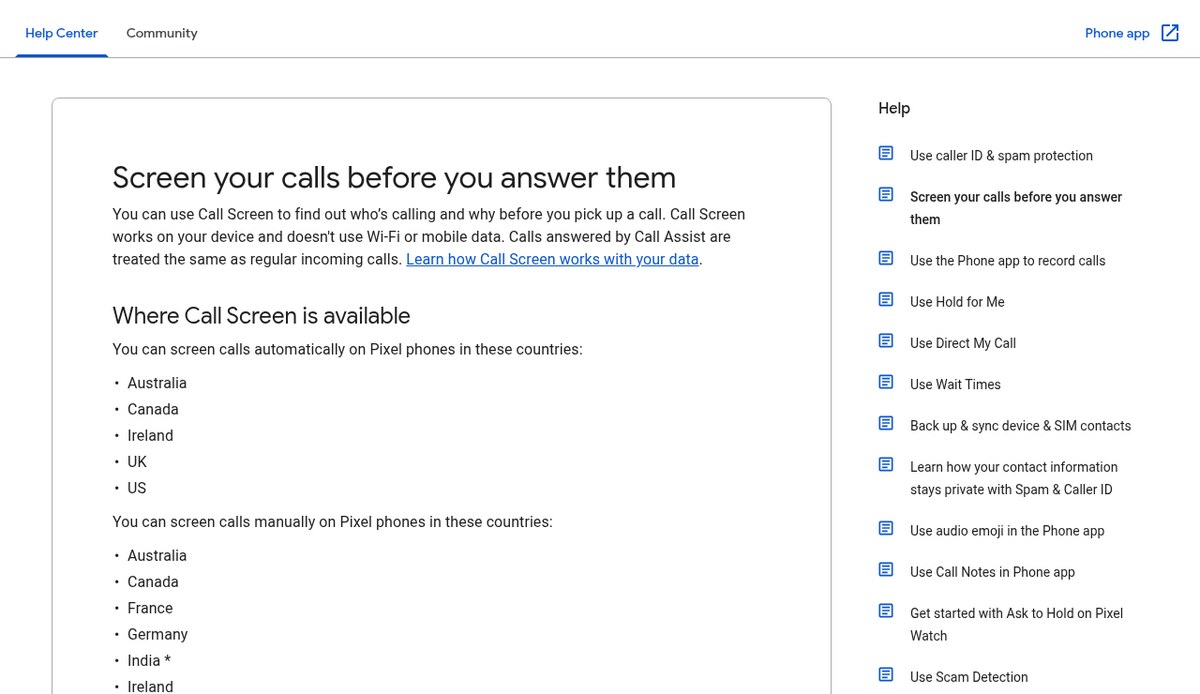
Pro User Tip: Enable Spam and Call Screen Protection in your phone’s default Phone app settings to activate automatic AI screening for unknown callers.
4. Silicon Breakdown: How Leading 2026 Processors Compare
| Chipset Family | Flagship Devices | NPU Compute (TOPS) | Standout AI Specialization |
|---|---|---|---|
| Snapdragon 8 Elite Gen 5 | Samsung Galaxy S25/S26, OnePlus 13/14, Xiaomi 15 | 55+ TOPS | Multimodal Live Translation & 200MP Generative Photography |
| Apple A19 Pro | iPhone flagships Pro, iPhone flagships Pro Max | 50+ TOPS | Hardware Security Enclave & Natural Language Siri Intelligence |
| Google Tensor G5 | Google Google Pixel flagships Pro, Google Pixel flagships Pro Fold | 48+ TOPS | Contextual Screen Reasoning & Real-Time Call Screening |
For a deeper look into automated software architecture, explore our companion technical guide on AI-Driven Web Development & Autonomous Coding Frameworks in 2026.
5. Related Technical Resources
- 🎬 Creative Media Production: Speed up your video creation workflow with 7 Powerful AI Video Editing Breakthroughs for Creators in 2026.
- 🌐 Spatial Computing & 3D Web: Discover volumetric spatial design in 7 important spatial AI technologies and creator workflows for Creators in 2026.
- 🤖 Autonomous Workflows: Learn how agent swarms execute complex tasks in Autonomous AI Agents & Multi-Agent Workflows in 2026.
- 🦾 Embodied Robotics: Explore Vision-Language-Action foundation models in Humanoid Robotics & Physical AI in 2026.
- 📱 Local Machine Learning: Master quantized edge processing in On-Device AI Models & Local Machine Learning in 2026.
- 🔍 Generative Search Optimization: Rank your technical content in AI citation engines with Generative Engine Optimization & AI Search in 2026.
6. Frequently Asked Questions (FAQ)
Q1: Do mobile AI features work without an internet connection in 2026?
Answer: Yes. The majority of core mobile AI features—including live voice translation, voice recorder summaries, photo object removal, and notification prioritization—run 100% on-device using local Neural Processing Units (NPUs) and downloaded language packs, requiring zero active internet connection.
Q2: Does using on-device AI drain smartphone battery faster?
Answer: No. Modern NPUs are designed specifically for tensor operations and are up to 85% more energy-efficient than traditional CPUs. In fact, features like Adaptive Battery AI actively extend total daily battery life by learning your usage habits and regulating background power consumption.
Q3: Which smartphone brand has the best overall AI features in 2026?
Answer: Samsung (Galaxy AI) offers the widest and most versatile feature set for productivity, photo editing, and multilingual translation. Google (Pixel) leads in contextual screen reasoning and proactive call screening, while Apple (Apple Intelligence) provides the smoothest system-wide privacy integration across iOS apps.
Q4: Are my personal photos and voice recordings safe when using phone AI?
Answer: Yes. Because processing occurs on the physical device silicon, your raw photos, voice recordings, and notes are processed locally and stored inside encrypted hardware enclaves. They are not uploaded to cloud servers or used to train public machine learning models.
Q5: Can older smartphones get these 2026 AI features through software updates?
Answer: While basic cloud-assisted AI tools can be pushed to older devices, hardware-intensive features (like real-time zero-latency call translation and instant sketch-to-image generation) require dedicated NPU hardware (45+ TOPS) found primarily in devices released from 2024 onwards.
7. Summary & Engineering Implementation Guidelines
Mobile artificial intelligence in 2026 is no longer a futuristic gimmick—it is a foundational daily utility that saves hours of time, breaks language barriers, and safeguards personal privacy. By taking full advantage of your smartphone’s built-in neural capabilities, you unlock a personalized digital assistant that works seamlessly anywhere in the world.
Technical Integration Checklist:
- [ ] Step 1: Download Offline Language Packs — Go to your phone’s translation settings and download offline language models so live translation works seamlessly without roaming data.
- [ ] Step 2: Master Circle to Search / Visual Intelligence — Practice long-pressing your navigation bar to search items, translate foreign text on-screen, or solve math equations instantly.
- [ ] Step 3: Enable Voice Recorder AI Summaries — Use your built-in recorder for meetings and lectures to automatically generate structured executive summaries and action checklists.
- [ ] Step 4: Turn On Real-Time Call Scam Protection — Activate AI spam and call screening in your phone app settings to automatically block fraudulent callers.
- [ ] Step 5: Activate Adaptive Battery Preferences — Enable AI battery optimization in system settings to let the neural engine maximize your daily screen-on time.
Stay tuned to ISMARTANJI CREATIONS for the latest smartphone tips, emerging AI breakthroughs, and mobile tech tutorials in 2026.
Sources & Further Reading
Written & Verified by Sampath Anji
Sampath Anji is a technology researcher, systems developer, and digital creator based in Telangana, India. He specializes in on-device AI architectures, autonomous agent workflows, high-throughput inference engines, and digital media production. Every tutorial on ISMARTANJI CREATIONS is grounded in code reproducibility, verified documentation, and transparent test environments. Read our full testing methodology on our About Us page, or submit feedback and code updates via our Contact Desk.