
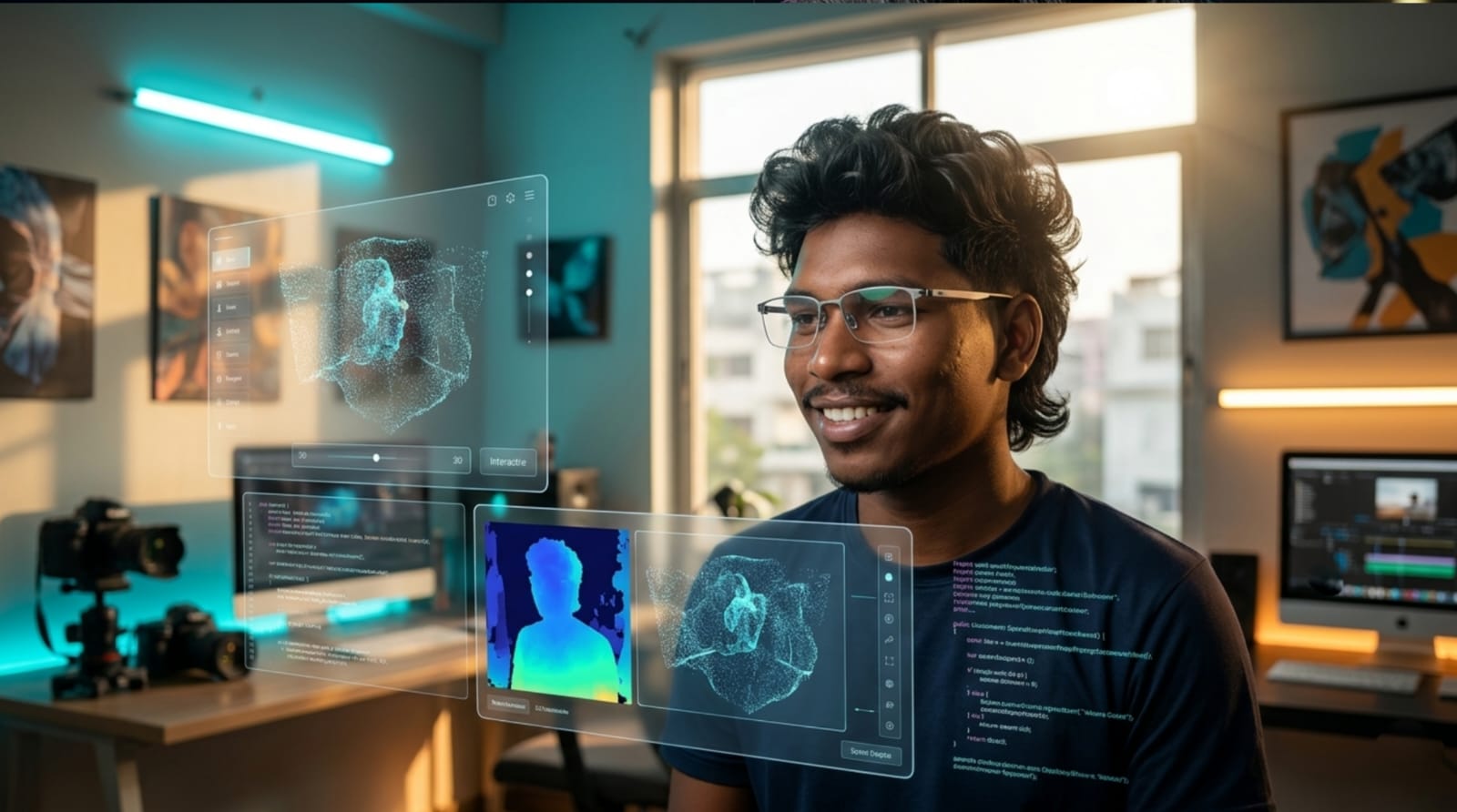
Discover 7 important spatial AI technologies and creator workflows in 2026. Master multimodal smart glasses, real-time 3D neural rendering, and spatial workflows for creators.
Architectural Overview & Background
For decades, digital interaction remained trapped behind flat glass rectangles. Whether drafting articles on desktop monitors, editing video clips on laptops, or scrolling feeds on handheld smartphones, our visual relationship with computing was strictly two-dimensional. We translated rich, three-dimensional human thoughts into flat pixels, coordinate grids, and planar touch gestures.
In 2026, that boundary has dissolved entirely. We have crossed into the era of Spatial AI—the convergence of real-time computer vision, on-device neural processing units (NPUs), multimodal foundation models, and spatial sensor arrays that understand the geometry, semantics, and acoustic properties of the physical world. Instead of forcing creators to look down at screens, spatial AI projects intelligent, context-aware digital objects and tools directly into physical environments.
1. Deconstructing Spatial AI: How Machines Understand 3D Reality
To appreciate why spatial AI represents a monumental leap forward, one must understand how spatial intelligence differs from traditional computer vision.
Legacy computer vision algorithms operated primarily in 2D pixel space. A camera captured an image, and a convolutional neural network identified bounding boxes around detected objects. While useful for basic image classification, the machine had no true understanding of physical volume, depth distance, occlusion, surface texture, or spatial persistence.
Spatial AI replaces flat image processing with unified 3D perceptual reasoning through three core mechanisms:
- Simultaneous Localization and Mapping (SLAM) with Neural Fields: Modern spatial devices track their exact 6-DoF (six degrees of freedom) position within a room while constructing real-time volumetric meshes of physical walls, furniture, and obstacles.
- Semantic Scene Segmentation: Foundation vision-language models do not merely see surfaces; they classify every object in real time—recognizing that a wooden plane is a desk where virtual monitors can rest, or that an opening is a doorway leading to another room.
- Continuous Spatial Anchoring: Spatial neural networks assign persistent coordinate anchors to digital assets. A virtual reference board or 3D asset placed in your studio remains locked to that exact physical coordinate when you return days later.
2. 2D Screen AI vs. 3D Spatial AI (2026 Comparison Matrix)
Understanding the fundamental operational shifts between screen-bound AI and embodied spatial AI helps creators choose the right toolstack:
| Dimension | 2D Screen AI (Legacy) | 3D Spatial AI (Representative 2026 Capabilities) |
|---|---|---|
| Primary Canvas | Flat pixel displays (Smartphones, Monitors) | 3D Physical Space & Volumetric Overlays |
| Sensory Modalities | Text, 2D images, Audio waveforms | RGB-D feeds, LiDAR, Spatial Audio, Eye/Hand tracking |
| Computing Architecture | Cloud-first centralized inference | Edge-first hybrid (On-Device NPU + Cloud Rendering) |
| Spatial Awareness | None (Bounded by app window coordinates) | Metric-accurate 6-DoF depth and physics simulation |
| Creator Interaction | Keyboard, mouse, touch taps | Micro-gestures, gaze-intent, natural voice commands |
| Latency Requirement | 200ms – 1,000ms (Tolerable) | Sub-20ms motion-to-photon (Strict requirement) |
| Core Deliverable | 2D text, static images, flat video files | Interactive USDZ/glTF 3D meshes, spatial environments |
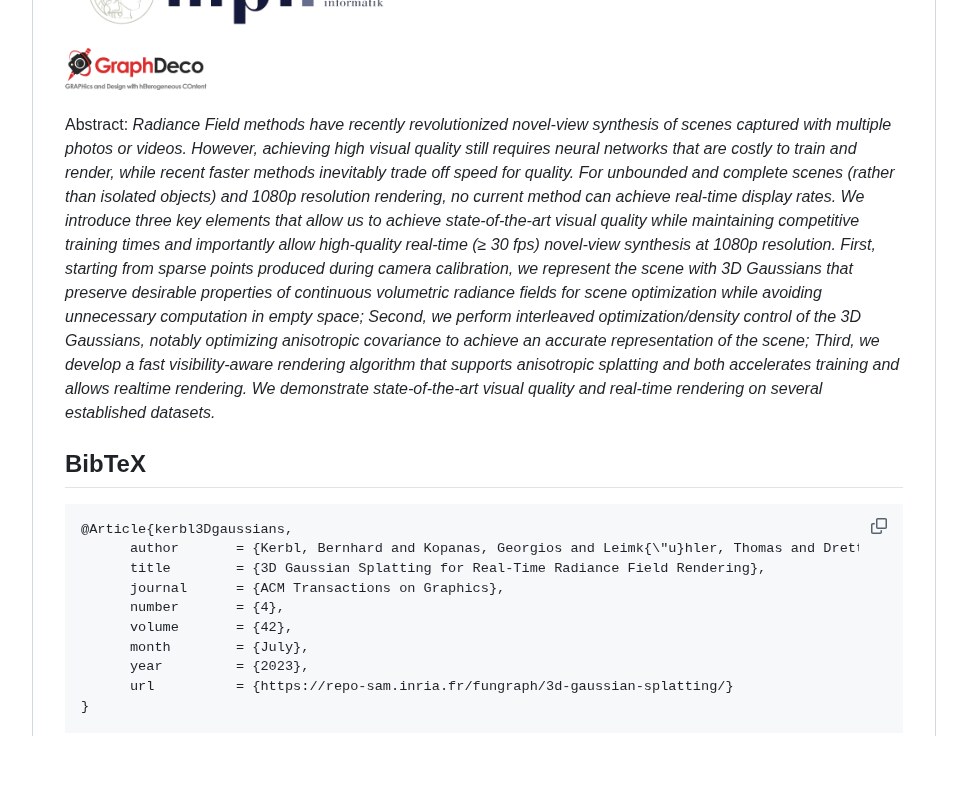
3. The Spatial Computing and 3D Gaussian Splatting: Immersive Media Pipelines for Creators
Modern hardware and algorithm breakthroughs have unlocked powerful new creative capabilities. Here are the Seven important spatial AI technologies and creator workflows empowering digital creators in 2026:
3.1 Real-Time 3D Gaussian Splatting on Mobile Hardware
For years, converting real-world objects and locations into interactive 3D assets required tedious photogrammetry pipelines that took hours of desktop rendering. In 2026, 3D Gaussian Splatting (3DGS) has been optimized to run directly on mobile system-on-chips.
Using on-device Neural Processing Units (NPUs), mobile creators can record a 30-second casual video walk-around of a room, product, or set, and generate a photorealistic, fully navigable 3D scene within two minutes. Unlike polygon meshes that struggle with complex lighting, reflections, and fine textures like foliage or hair, 3DGS represents scenes using millions of anisotropic 3D Gaussians. This enables instant camera path animations, cinematic virtual scouting, and photorealistic asset imports into video production workflows.
3.2 Neural Spatial Audio & Acoustic Environment Mapping
Visual realism without accurate spatial acoustics breaks immersion. 2026 spatial audio engines employ real-time neural impulse response estimation. As a creator moves through a room or wears smart audio glasses, microphone arrays analyze room reflections, wall materials, and ambient reverberation.
The AI instantly calculates an acoustic mesh of the physical space, allowing creators to place virtual audio sources—such as podcast guests, musical stems, or cinematic sound effects—at precise 3D physical coordinates. When listeners turn their heads, sound cues shift dynamically with binaural accuracy, replicating natural human hearing.
3.3 Multimodal Smart Glasses with Sub-20ms Neural Latency
The transition from bulky VR headsets to lightweight daily-wear smart glasses represents one of 2026’s biggest hardware milestones. Modern smart glasses weigh under 50 grams while housing micro-LED waveguide displays and high-efficiency neural vision chips.
Equipped with multimodal Small Language Models (SLMs) running locally, these glasses process visual feeds with sub-20ms latency. Creators wearing smart glasses can look at a piece of hardware, ask “How do I rewire this audio interface?”, and receive instant visual step-by-step HUD highlights directly superimposed over the correct ports.
3.4 Zero-Shot Generative World Building & Interactive Environments
Generating 3D environments previously required teams of 3D modeling specialists. Today, generative spatial models allow creators to describe complex virtual spaces in natural language and generate ready-to-use volumetric worlds.
A creator can prompt: “A cozy cyberpunk loft in Tokyo with rain-streaked glass windows, neon interior signs, and modular wooden furniture.” Within seconds, the spatial generative engine constructs a fully textured, physically simulated environment with semantic collision boundaries, ready for export into WebXR, Unreal Engine 5, or Apple VisionOS environments.
3.5 Neural Hand & Micro-Gesture Tracking Without Controllers
Clunky physical controllers and bulky data gloves have been replaced by vision-based kinematic models. Using compact wide-angle monochrome tracking cameras, on-device neural networks calculate 26-point skeletal tracking for each hand at 120 frames per second.
Creators can sculpt 3D models in mid-air, manipulate timeline layers in video editing software with subtle finger pinches, and trigger customizable macros through micro-gestures that require minimal physical movement.
3.6 Edge-Cloud Hybrid Spatial Memory Networks
Spatial computing applications must remember where things belong across sessions. In 2026, edge-cloud hybrid spatial memory networks solve the persistence bottleneck.
When you place virtual reference monitors, project Kanban boards, or 3D character drafts around your physical workspace, the on-device NPU compresses room anchor fingerprints into lightweight cryptographic tokens. Even if you restart your device or relocate to another room, your spatial workspace restores instantaneously without requiring a full room re-scan.
3.7 Intelligent Contextual AI Assistants Grounded in Physical Space
The most impactful breakthrough for day-to-day productivity is physical-context grounding. Unlike traditional chatbots that only see text queries, spatial AI assistants share your visual and physical perspective.
If you are assembling a studio lighting rig, recording a live tutorial, or reviewing physical prototype packaging, the assistant observes your actions through your glasses or workspace cameras. It can warn you if a key light is casting harsh shadows, verify color calibration, or suggest optimal camera framing angles in real time.
4. Technical Architecture: How Creators Build for the Spatial Web
Building content for spatial computing requires understanding the modern technical stack and open standards powering the spatial web in 2026:
- Open Standards & Universal Formats: Modern workflows rely on universal 3D asset formats like Universal Scene Description (USD / USDZ) and glTF 2.0. These formats ensure that generated 3D assets render consistently across iOS, Android, macOS, and WebXR browser viewports.
- WebXR & Browser-Based Spatial Distribution: Creators no longer need to build native standalone apps for every platform. WebXR standards allow interactive 3D models and spatial AR experiences to load directly inside standard web browsers with zero installation friction.
- On-Device NPU Acceleration: High-speed spatial tracking, depth estimation, and SLM voice reasoning require mobile processors delivering 45+ TOPS (Trillions of Operations Per Second). Dedicated neural engines keep devices running cool and preserve battery life during extended creative sessions.
For a deeper exploration of building high-performance web applications that integrate next-generation automation and modern standards, read our guide on AI-Driven Web Development & Autonomous Coding Frameworks in 2026.
5. Related Technical Resources
Building an interconnected knowledge base across modern technology domains is key to mastering digital production. Explore our companion deep-dive guides on ISMARTANJI CREATIONS:
- Agentic Automation: Learn how autonomous agent swarms coordinate complex engineering tasks in our guide on Autonomous AI Agents & Multi-Agent Workflows in 2026.
- Embodied Physical AI: Discover how Vision-Language-Action models control real-world robotic hardware in our breakdown of Humanoid Robotics & Physical AI in 2026.
- Mobile Silicon & Privacy: Protect your digital assets and learn how on-device enclaves secure personal data in our analysis of AI-Powered Mobile Security & Privacy in 2026.
- Local Edge Computing: Master quantized neural models and mobile processing in On-Device AI Models & Local Machine Learning in 2026.
- Creative Media Suites: Accelerate your visual production pipelines with Next-Gen AI Video & Photo Editing Tools in 2026.
- Generative Discovery: Optimize your content for AI synthesis engines with our blueprint on Generative Engine Optimization & AI Search in 2026.
6. తరచుగా అడిగే ప్రశ్నలు (FAQ)
Q1: What is the primary difference between Computer Vision and Spatial AI?
Traditional computer vision analyzes 2D images to classify objects or detect bounding boxes in flat pixel coordinates. Spatial AI unifies 3D volumetric depth mapping, SLAM spatial tracking, semantic scene understanding, and multimodal reasoning to perceive and interact with the physical world in real 3D space.
Q2: Do creators need expensive headsets to leverage spatial AI tools in 2026?
No. While dedicated headsets provide full immersive experiences, many of the most powerful spatial AI tools—including 3D Gaussian Splatting, neural spatial audio mapping, and mobile AR tracking—run natively on modern smartphones and tablets equipped with LiDAR and high-performance NPUs.
Q3: How does 3D Gaussian Splatting differ from traditional photogrammetry?
Traditional photogrammetry reconstructs objects by calculating complex polygonal meshes and UV texture maps, which requires extensive compute time and often fails with reflective surfaces. 3D Gaussian Splatting represents scenes using millions of volumetric mathematical Gaussians, capturing photorealistic reflections, transparency, and complex geometry in a fraction of the processing time.
Q4: How does on-device processing protect privacy in spatial computing?
Spatial computing devices continuously capture camera feeds and microphone audio. In 2026, on-device neural processing units (NPUs) and secure hardware enclaves process eye-tracking, room geometry, and voice commands locally. Raw sensor data never leaves the device or travels to external cloud servers, safeguarding personal privacy.
Q5: How can digital publishers and creators monetize spatial AI content?
Creators can monetize spatial content by creating interactive 3D product previews for e-commerce brands, publishing WebXR educational experiences, producing spatial audio podcasts, and licensing photorealistic 3D environment scans for virtual production and game development.
7. Conclusion & Strategic Action Plan
Spatial AI marks the end of screen-constrained creativity and the dawn of persistent volumetric interaction. By adopting spatial tools today, creators, engineers, and digital publishers position themselves at the forefront of the spatial web.
Deployment Checklist:
- Audit 3D Asset Opportunities: Identify physical products, sets, or portfolio pieces that can be captured and converted into 3D Gaussian splats or interactive USDZ files.
- Integrate WebXR Previews: Add interactive 3D model viewers to your website pages to boost user engagement, session duration, and AdSense performance.
- Adopt Spatial Audio Workflows: Experiment with binaural room impulse mapping in your podcasting or video production setup to create immersive soundscapes.
- Test On-Device Spatial Tools: Utilize mobile scanning applications and on-device SLM assistants to streamline real-world workspace organization.
- Ground Content in Real Value: As spatial web adoption expands, prioritize original, high-quality spatial assets that provide genuine utility to your audience.
Stay tuned to ISMARTANJI CREATIONS for the latest operational guides, emerging tech tutorials, and digital productivity strategies in 2026.
Sources & Further Reading
- Kerbl et al., 3D Gaussian Splatting (arXiv)
- Mildenhall et al., NeRF (arXiv)
- Apple visionOS developer documentation
Written & Verified by Sampath Anji
Sampath Anji is a technology researcher, systems developer, and digital creator based in Telangana, India. He specializes in on-device AI architectures, autonomous agent workflows, high-throughput inference engines, and digital media production. Every tutorial on ISMARTANJI CREATIONS is grounded in code reproducibility, verified documentation, and transparent test environments. Read our full testing methodology on our About Us page, or submit feedback and code updates via our Contact Desk.