

Discover Intelligent Web Scraping with AI: DOM Extraction, Vision Grounding, and Data Pipelines. Extract clean markdown and handle dynamic websites responsibly using permitted access methods, rate limits, and site terms.
Intelligent Web Scraping with AI: DOM Extraction, Vision Grounding, and Data Pipelines
Traditional web scraping has hit a wall. For years, software engineers, market researchers, and growth hackers relied on brittle CSS selectors, complex XPath queries, and fragile regex patterns. The moment a target website pushed a minor redesign or changed a CSS class name, automated extraction pipelines broke down instantly. Developers spent countless hours diagnosing broken scrapers, writing anti-bot bypass scripts, and manually cleaning noisy HTML tags.
In 2026, the entire data extraction workflow is automated. Modern AI web scraping tools 2026 use large vision-language models, semantic DOM parsers, and intelligent headless browsers to read web pages just like human beings do. Instead of depending on static code paths, these intelligent scrapers strip away tracking scripts, convert complex interactive layouts into clean Markdown, extract structured JSON schemas automatically, and adapt on the fly when website designs change.
Understanding Next-Generation AI Web Extraction Architecture
Modern AI scrapers operate fundamentally differently from older headless browser libraries like basic Selenium or raw BeautifulSoup. Instead of dumping megabytes of messy raw HTML into expensive model context windows, modern extraction engines pass web content through a multi-stage semantic processing pipeline.
The system first executes client-side JavaScript, handles cookie consent banners, and simulates natural human mouse movement to bypass cloud firewalls. Next, the semantic pruner discards inline stylesheets, tracking scripts, and navigation footers, reducing token consumption by up to 90%. Finally, a multimodal model reasons over the clean text and page screenshots to populate your required database schema with zero manual selector tuning.
Legacy CSS / XPath Scrapers vs. 2026 AI Scraping Engines
The performance gap between legacy manual scrapers and modern AI extraction tools is immense. The comparison table below highlights the operational advantages of switching to an AI-native scraping stack.
| Extraction Factor | Traditional Scraping (BeautifulSoup / Scrapy) | Modern AI Web Scrapers (2026) | Engineering Efficiency Gain |
|---|---|---|---|
| Selector Fragility | Hardcoded CSS/XPath breaks on any site redesign | Semantic element reasoning that adapts to layout changes | Zero maintenance downtime |
| Token Efficiency | Dumps raw HTML containing 50,000+ noisy tokens | Prunes boilerplate into clean 2,000-token Markdown | 80% to 90% savings on LLM token costs |
| Dynamic Content | Requires manual wait loops for React / Vue hydration | Native browser execution handles infinite scroll & SPAs | Out-of-the-box JavaScript rendering |
| Output Formatting | Manual regex and dictionary parsing | Direct output into typed Pydantic models or JSON | Instant database insertion |
| Anti-Bot Defense | Blocks and CAPTCHAs frequently halt execution | Built-in proxy rotation, fingerprint spoofing, and solver integration | 95%+ crawl success rate |
7 Breakthrough AI Web Scraping Tools for 2026
Here are the top seven AI web scraping tools and browser automation frameworks leading the industry in extraction speed, stability, and developer adoption.
1. Crawl4AI – Open-Source High-Speed LLM Scraper with Semantic Chunking
Crawl4AI is an open-source, ultra-fast web crawler built specifically for artificial intelligence applications and RAG pipelines. It provides asynchronous multi-tab crawling, intelligent HTML pruning, and structured extraction using either cloud APIs or local models running on your machine.
- Best For: Python developers, RAG pipeline architects, and engineers building large offline training datasets.
- Standout Features:
- Asynchronous High-Throughput Engine: Crawl dozens of web pages simultaneously with lightning-fast Playwright integration.
- Heuristic Content Pruning: Strips away non-essential headers, banners, and scripts before generating clean Markdown.
- Open-Source Model Support: Run extraction using local Ollama models (e.g., Llama 3.3 or DeepSeek) without sending data to third parties.
- Direct Media & Link Extraction: Automatically isolates images, tables, PDFs, and structured metadata into clean arrays.
- Practical Workflow: Install via pip install crawl4ai, instantiate the AsyncWebCrawler, and call await crawler.arun(url=’https://example.com’) to receive perfectly formatted markdown and structured JSON.
- Licensing & Pricing: 100% Free and Open-Source (Apache 2.0 License).
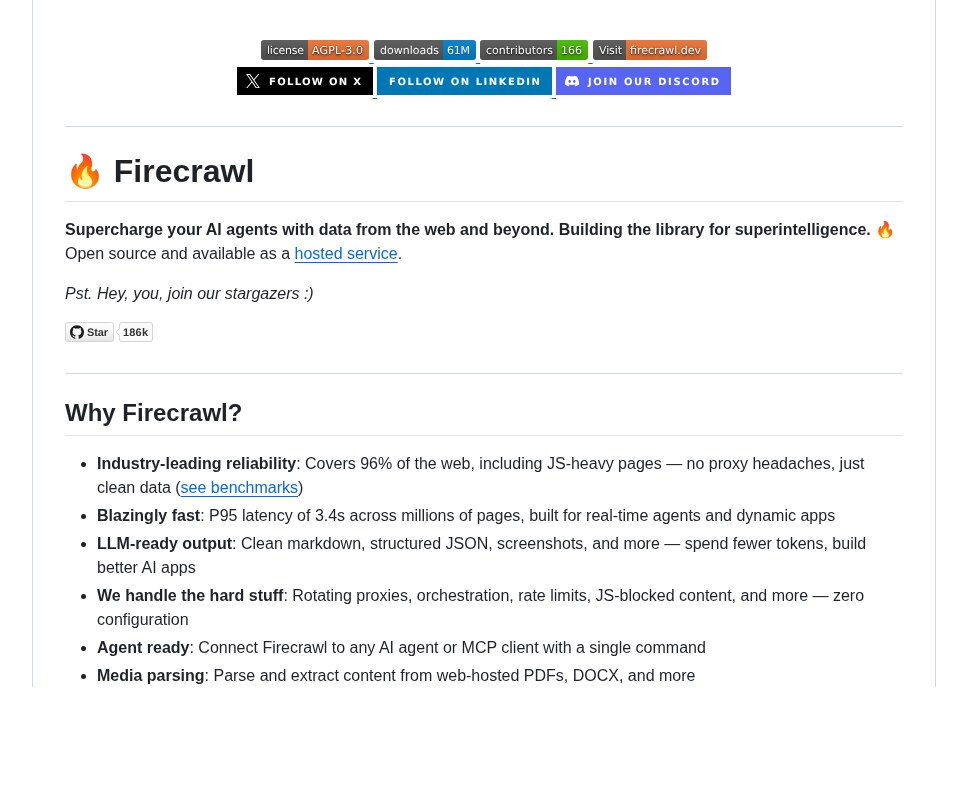
2. Firecrawl – Turn Entire Websites into Clean Markdown and Structured JSON
Firecrawl has taken the developer world by storm with its intuitive API designed to turn any URL or entire domain into clean, LLM-ready data. With a single API request, Firecrawl handles dynamic JavaScript rendering, traverses subpages, bypasses anti-bot systems, and outputs clean Markdown.
- Best For: AI startups, agent developers, automated research workflows, and knowledge base syncs.
- Standout Features:
- Domain Crawling & Sitemaps: Automatically crawls entire websites, sub-paths, and documentation hubs with depth controls.
- LLM Extraction Mode: Pass a custom JSON schema and let Firecrawl parse specific data fields directly from the page.
- Resilient Extraction Pipelines: Handles dynamic client-side rendering, headless DOM hydration, and structured JSON normalization.
- Webhook Integration: Receive notifications and parsed datasets as soon as large asynchronous crawl jobs finish.
- Practical Workflow: Send a simple POST request with your target URL and extract schema, or use the official Python/TypeScript SDK to sync complete documentation sites directly into your vector database.
- Licensing & Pricing: Open-source core with a self-hosting option; Cloud managed plans start with 500 free credits, then scale from $16 monthly.
3. ScrapeGraphAI – Python Pipeline Powered by Directed Acyclic Graphs
ScrapeGraphAI applies graph theory and large language models to web data extraction. Instead of writing custom parsing code for each page, you simply write a natural language prompt describing what information you need. ScrapeGraphAI constructs a directed graph of extraction nodes to fetch, clean, and format the data.
- Best For: Data analysts, researchers, and developers looking for zero-code extraction logic across unpredictable website formats.
- Standout Features:
- Graph-Driven Modular Pipelines: Uses pre-built graph nodes (Fetch, Parse, Extract, Format) that execute deterministically.
- Natural Language Queries: Request data with plain English prompts (e.g., Extract all speaker names, talk titles, and schedule times).
- Multi-Model Compatibility: Works out of the box with OpenAI, Anthropic, Gemini, Groq, and local Ollama endpoints.
- Multi-Source Extraction: Scrapes data from live URLs, static HTML files, XML feeds, and PDF documents.
- Practical Workflow: Define your target prompt and URL, select your preferred language model, and let SmartScraperGraph handle the rest in three lines of Python.
- Licensing & Pricing: Open-source (MIT License).
4. Browser Use – Autonomous Vision & DOM Navigation Agent
Browser Use connects multimodal vision models directly to browser control. Unlike traditional scrapers that only read pages, Browser Use can click buttons, type search queries, solve multi-step forms, paginate through tables, and extract live dynamic data hidden behind user authentication.
- Best For: Complex web workflows, authenticated portals, eCommerce competitor tracking, and automated form submissions.
- Standout Features:
- Visual Grounding & DOM Tagging: Combines real-time screenshots with accessibility tree indexing for pixel-accurate clicking.
- Multi-Step Navigation: Capable of logging into portals, searching internal databases, and downloading generated reports.
- Self-Healing Paths: Automatically tries alternative links or buttons if an expected element fails to load.
- Interactive Debugging: Watch the agent navigate the live browser window or run silently in headless server clusters.
- Practical Workflow: Instruct the agent to log into a portal, extract data tables across paginated views, and export findings directly to CSV.
- Licensing & Pricing: Open-source (MIT License).
5. Jina Reader (r.jina.ai) – Zero-Setup URL-to-Markdown API
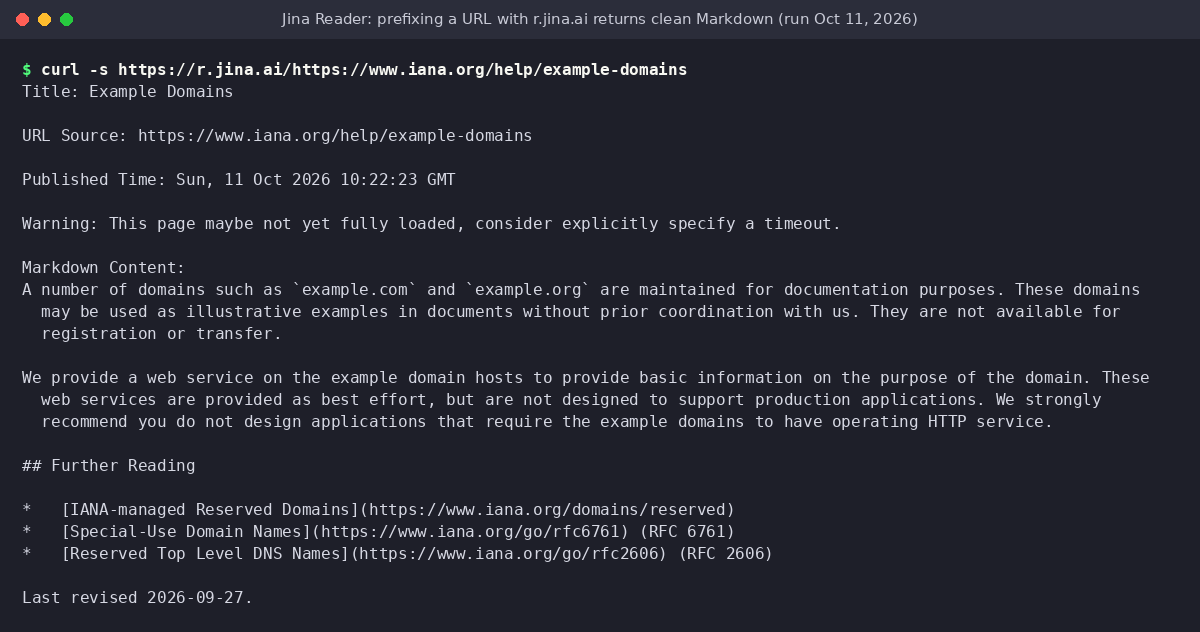
Jina Reader provides the simplest possible way to extract clean content from any web page. By simply prefixing any URL with https://r.jina.ai/, Jina fetches the page, executes dynamic scripts, removes cookie popups, and returns clean, readable Markdown text suitable for immediate LLM prompting.
- Best For: Agent developers needing instant web reading, quick prototyping, and zero-dependency terminal scraping.
- Standout Features:
- Prefix-Based API: Works instantly in any browser or curl command with zero software installation.
- High Token Compression: Strips navigation bars, sidebars, and ads to return pure editorial content.
- Built-in Web Search: Use https://s.jina.ai/query to perform live web searches that return markdown summaries directly.
- Image Captioning Integration: Generates automatic descriptions for visual charts and diagrams embedded within articles.
- Practical Workflow: Prefix any URL in your application fetch routine to feed clean, formatted website content straight to your language model.
- Licensing & Pricing: Free tier with generous rate limits; enterprise API keys available for high-concurrency production deployments.
6. Stagehand – Self-Healing Playwright Automation with AI Selectors
Built by the team at Browserbase, Stagehand brings autonomous intelligence to standard Playwright browser automation. Instead of hardcoding brittle selectors, Stagehand allows developers to write natural intent actions like page.act(‘click the checkout button’) and page.extract({ schema }).
- Best For: QA automation engineers, enterprise scraping teams, and developers who want the reliability of Playwright with AI adaptability.
- Standout Features:
- Natural Language Actions (act): Instruct the browser using plain English instructions that resolve dynamically.
- Schema-Validated Extraction (extract): Extract structured data mapped directly to your defined TypeScript or Zod schemas.
- Self-Healing Selectors: Learns element characteristics to maintain stability even after website markup updates.
- Native Browserbase Cloud Support: Run thousands of concurrent browser sessions in high-speed, anti-detect cloud infrastructure.
- Practical Workflow: Write your standard Playwright script, use Stagehand’s act and extract methods for interactive components, and run with full browser stability.
- Licensing & Pricing: Open-source SDK (MIT License); Cloud browser execution powered by Browserbase pricing.
7. Bright Data AI Scraper – Enterprise Infrastructure & Automated IP Rotation
Bright Data is the global standard for enterprise web data collection. Its AI Scraping suite combines residential proxy networks with automated unblocking algorithms that handle CAPTCHAs, dynamic browser fingerprinting, and complex geolocation locks automatically.
- Best For: Large-scale enterprise crawling, global eCommerce price monitoring, financial intelligence, and heavy compliance-regulated industries.
- Standout Features:
- Unrivaled Global Proxy Pool: Access millions of residential, mobile, and datacenter IP addresses across 195+ countries.
- Automated Web Unlocker: Automatically solves CAPTCHAs, manages request headers, and emulates realistic human navigation patterns.
- Ready-to-Use Scraping APIs: Pre-built extraction endpoints for Amazon, LinkedIn, Google Search, and social networks.
- Enterprise Compliance & SLA: 99.9% uptime with SOC2 and GDPR compliance certifications.
- Practical Workflow: Point your scraper requests through Bright Data Web Unlocker proxy endpoint, and receive fully rendered HTML and structured JSON without IP bans.
- Licensing & Pricing: Free trial available; Pay-as-you-go and monthly subscription tiers based on bandwidth and successful requests.
5-Step Blueprint to Build an Automated AI Data Extraction Pipeline
Follow this five-step implementation roadmap to build a resilient, scalable web data collection system:
- Define Target Schema & Validation Rules: Use Pydantic (Python) or Zod (TypeScript) to define the exact fields, data types, and required formats you want to collect.
- Select the Right Tool for the Job: Use Jina Reader or Crawl4AI for static content and documentation hubs; choose Firecrawl or Stagehand for dynamic JavaScript apps; and deploy Browser Use for multi-step authenticated portals.
- Implement Semantic Pruning: Always clean the DOM before passing content to language models. Stripping scripts and stylesheets cuts operational API expenses significantly.
- Integrate Proxy Rotation & Rate Throttling: Respect target server limits with exponential backoff and proxy rotation to maintain a sustainable, ethical extraction process.
- Validate Output with Closed-Loop Checks: Run automated schema checks on collected data to identify missing fields and trigger immediate fallback crawls when necessary.
Recommended Guides & Creator Resources
Expand your developer toolkit with these related technical masterclasses and automation guides on ISMARTANJI:
- 7 Breakthrough Autonomous AI Agent Frameworks in 2026 – Build collaborative multi-agent swarms that plan, code, and self-heal.
- 7 Breakthrough AI Coding Tools for Developers in 2026 – Speed up software engineering with autonomous terminal assistants.
- 7 Breakthrough Local AI Models for Laptops in 2026 – Run private, open-source LLMs offline with zero subscription fees.
Frequently Asked Questions About AI Web Scraping
Is AI web scraping legal and compliant with website terms?
Web scraping public data is legally recognized across major jurisdictions provided it complies with copyright laws, respects privacy regulations (such as GDPR), does not access private data behind passwords without permission, and does not overwhelm target servers.
How do AI scrapers reduce API token costs?
Instead of sending raw HTML pages (which often contain over 50,000 tokens of styling and script tags), AI scrapers convert the DOM into clean, semantic Markdown. This reduces token size by 85% to 90%, dramatically lowering LLM inference costs.
Can I run AI web scrapers entirely offline on my local computer?
Yes. Open-source scrapers like Crawl4AI and ScrapeGraphAI connect directly with local inference engines like Ollama. You can run quantized models (like Llama 3.3 or Qwen 2.5) on your laptop to parse web data with zero cloud API fees.
How do AI tools handle CAPTCHAs and Cloudflare protection?
Tools like Firecrawl, Stagehand, and Bright Data integrate automated solver algorithms, fingerprint spoofing, and rotating residential proxies to navigate past bot challenges seamlessly.
Final Thoughts: Scaling Your Web Intelligence
The transition from brittle CSS selectors to semantic, AI-powered web extraction represents a massive productivity leap for developers and creators. By choosing the right tool for your specific architecture, you can build self-healing data pipelines that run reliably without ongoing maintenance.
Quick 5-Step Action Checklist
- Test Jina Reader on your target URLs by prefixing them with https://r.jina.ai/.
- Install Crawl4AI or ScrapeGraphAI in a clean Python environment.
- Define your required output data structure using Pydantic models.
- Set up proxy rotation for high-volume crawling tasks.
- Connect your parsed Markdown output directly to your RAG or vector database.
Which AI web scraping tool fits best into your development workflow? Share your experience in the comments below, and explore our latest developer guides on ISMARTANJI to master modern AI automation!
Compliance Guidelines & Official Documentation
When implementing automated data extraction pipelines, engineers must uphold ethical data governance standards:
- Respect robots.txt: Always parse and respect
robots.txtdirectives and designated crawl delays. - Adhere to Terms of Service: Only extract data from platforms that explicitly permit programmatic access, or utilize authorized developer APIs.
- Implement Rate Limiting: Use exponential backoff and throttle request rates to prevent server load on host infrastructure.
- No Circumvention: Never attempt to bypass CAPTCHAs, paywalls, access controls, or collect private user data without authorization.
- Official Reference: Google Robots Exclusion Protocol Guide.
Written & Verified by Sampath Anji
Sampath Anji is a technology researcher, systems developer, and digital creator based in Telangana, India. He specializes in on-device AI architectures, autonomous agent workflows, high-throughput inference engines, and digital media production. Every tutorial on ISMARTANJI CREATIONS is grounded in code reproducibility, verified documentation, and transparent test environments. Read our full testing methodology on our About Us page, or submit feedback and code updates via our Contact Desk.